


Your shopping cart is empty!
Daylily "Knjažich"
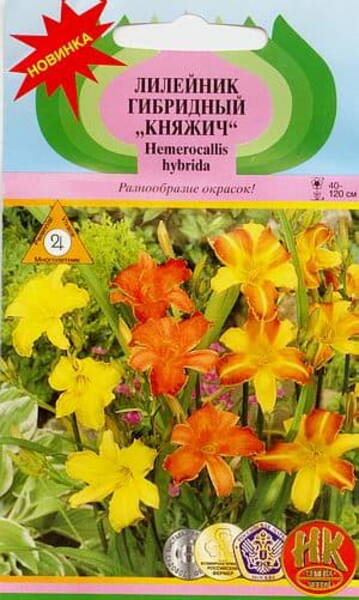
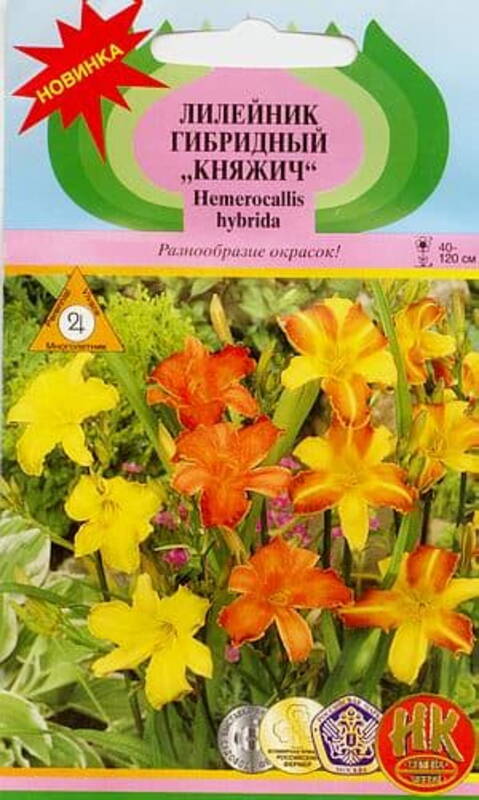
Hemerocallis hybrida
Daylily "Knjažich" - Hemerocallis hybrida.
Physical Characteristics Perennial growing to 1.2m. It is not frost tender. It is in flower from July to September. The flowers are hermaphrodite (have both male and female organs) and are pollinated by Insects. We rate it 4 out of 5 for usefulness.
The plant prefers light (sandy), medium (loamy) and heavy (clay) soils and can grow in heavy clay soil. The plant prefers acid, neutral and basic (alkaline) soils. It can grow in semi-shade (light woodland) or no shade. It requires dry or moist soil. Habitats and Possible Locations Woodland, Sunny Edge, Dappled Shade. Cultivar Stafford: Woodland, Cultivated Beds, Sunny Edge, Dappled Shade. Cultivation details There are many cultivars of garden origin in this genus that cannot be placed as part of a species simply because they are the result of many generations of hybridization. In general they all have edible flowers, young shoots and roots, though the quality will vary considerably from cultivar to cultivar. The following notes are general for the genus. Succeeds in most soils, including dry ones, preferring a rich moist soil. Grows well in heavy clay soils. Succeeds in short grass if the soil is moist. Succeeding in sun or shade, it produces more flowers in a sunny position though these flowers can be shorter-lived in very sunny positions. Prefers a pH between 6 and 7. Hybridizes freely with other members of this genus. Individual flowers are very short-lived, they open in the late afternoon and fade in the following morning. Plants take a year or two to become established after being moved. Plants seem to be immune to the predations of rabbits. The plants are very susceptible to slug and snail damage, the young growth in spring is especially at risk. Propagation Seed - sow in the middle of spring in a greenhouse. Germination is usually fairly rapid and good, pot up the seedlings into individual pots when they are large enough to handle. Grow the plants on for their first winter in a greenhouse and plant out in late spring. Hemerocallis cultivars will not breed true from seed, though seedlings do offer an opportunity to develop superior varieties for eating. Division in spring or after flowering in late summer or autumn. Division is very quick and easy, succeeding at almost any time of the year. Larger clumps can be replanted direct into their permanent positions, though it is best to pot up smaller clumps and grow them on in a cold frame until they are rooting well. Plant them out in the spring.