


Your shopping cart is empty!
Fodder cabbage "Inka"
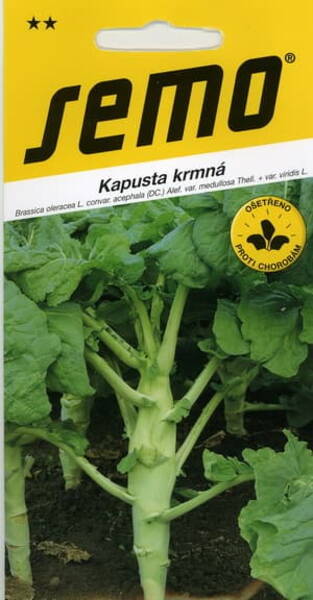
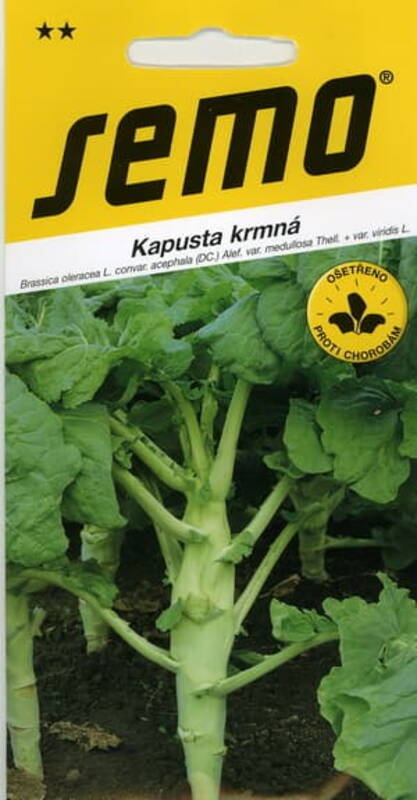
Brassica oleracea L. convar. acephala (DC.) Alef. var. medullosa Thell. var. viridis L.
1.36€
Ex Tax: 1.10€
Ex Tax: 1.10€
Forage Cabbage "Inka".
* Forage cabbage is one of the many types of cabbage that develops leaf-stem mass, which is used to feed farm animals.
Forage cabbage, like head cabbage, is a typical biennial plant of the Cabbage family. In the first year, a stem and leaves are formed, and in the second year, seeds. The stem height is 1-1.5 m, the mass of the above-ground part of one plant is 1-3 kg.
Plants of the first year (stems and leaves) are used as green fodder, especially in late autumn, when there is no other green fodder, and they are also ensiled together with other less juicy and difficult-to-ensile plants.
Nutritional value of cabbage is very high. It does not contain much dry matter (13.6%), but it is rich in protein, vitamin C, and especially carotene. 100 kg of fodder contains from 13 to 15 feed units and 1.8 kg of digestible protein. In terms of chemical composition and use, forage cabbage is close to forage root crops. It is also similar to them in terms of cultivation methods and the place it occupies in crop rotation.
Biological features.
The vegetation period of forage cabbage in the first year of its life is quite long (150-180 days). However, this circumstance does not create difficulties, since forage cabbage is extremely cold-resistant. Its seedlings tolerate frosts of -5-8°C, and in autumn the plants withstand temperature drops down to -12°C. In addition, strong spring frosts can be avoided if forage cabbage is grown by seedling method.
Cultivation methods.
Forage cabbage is placed in forage crop rotations. When grown from seeds in the ground, it can occupy an independent field after rye or after any row crop that cleans it of weeds. When planting seedlings in a humid summer, forage cabbage can also be grown as a stubble crop after harvesting winter rye for feed.
Forage cabbage is responsive to soil fertility, but it can give quite satisfactory yields even on weakly fertilized, infertile sod-medium podzolic soil. In terms of mechanical composition, loamy soils, well supplied with groundwater, are preferable for this crop. Manure (30-40 tons per 1 ha) and mineral fertilizers are applied directly under the cabbage. Manure is applied in the autumn for plowing, mineral fertilizers (nitrogen, phosphorus, potassium) at 80-120 kg of active substance per 1 ha in autumn or spring.
It has been established that forage cabbage is characterized by increased responsiveness to potassium. The soil is carefully cultivated and leveled in the spring before sowing.
Forage cabbage is sown with seeds in the ground in early spring in a wide-row method (row spacing 60-70 cm) with vegetable seeders to a depth of 1.5-3 cm. Sowing rates are 2.5-4 kg of seeds per 1 ha.
The main danger for cabbage during germination is the death of seedlings under a dense soil crust, the overgrowth of seedlings with weeds, and thinning from cruciferous fleas.
To prevent the harmful effects of the soil crust, mulching is used either continuously over the sowing or along the row. Peat or humus can serve as a mulching material. For row mulching, it is possible to make artisanal devices for seeders simultaneously with sowing, allowing to cover the row with a layer of peat 2-2.5 cm. The consumption of peat in this case will be only 2.5-3 tons per 1 ha.
To control cruciferous fleas, cabbage seedlings are treated with insecticides. The appearance of weeds can be prevented by early shallow cultivation of row spacings. With a non-seedling sowing method, there should be 10-15 seedlings per 1 m of row. This will allow you to get 100 thousand plants per 1 ha after thinning. With such a density of standing plants, thin stems of forage cabbage are formed, well leafy, available for mowing or for harvesting with a silage harvester.
1,0 g = 250-350 seeds.
* Forage cabbage is one of the many types of cabbage that develops leaf-stem mass, which is used to feed farm animals.
Forage cabbage, like head cabbage, is a typical biennial plant of the Cabbage family. In the first year, a stem and leaves are formed, and in the second year, seeds. The stem height is 1-1.5 m, the mass of the above-ground part of one plant is 1-3 kg.
Plants of the first year (stems and leaves) are used as green fodder, especially in late autumn, when there is no other green fodder, and they are also ensiled together with other less juicy and difficult-to-ensile plants.
Nutritional value of cabbage is very high. It does not contain much dry matter (13.6%), but it is rich in protein, vitamin C, and especially carotene. 100 kg of fodder contains from 13 to 15 feed units and 1.8 kg of digestible protein. In terms of chemical composition and use, forage cabbage is close to forage root crops. It is also similar to them in terms of cultivation methods and the place it occupies in crop rotation.
Biological features.
The vegetation period of forage cabbage in the first year of its life is quite long (150-180 days). However, this circumstance does not create difficulties, since forage cabbage is extremely cold-resistant. Its seedlings tolerate frosts of -5-8°C, and in autumn the plants withstand temperature drops down to -12°C. In addition, strong spring frosts can be avoided if forage cabbage is grown by seedling method.
Cultivation methods.
Forage cabbage is placed in forage crop rotations. When grown from seeds in the ground, it can occupy an independent field after rye or after any row crop that cleans it of weeds. When planting seedlings in a humid summer, forage cabbage can also be grown as a stubble crop after harvesting winter rye for feed.
Forage cabbage is responsive to soil fertility, but it can give quite satisfactory yields even on weakly fertilized, infertile sod-medium podzolic soil. In terms of mechanical composition, loamy soils, well supplied with groundwater, are preferable for this crop. Manure (30-40 tons per 1 ha) and mineral fertilizers are applied directly under the cabbage. Manure is applied in the autumn for plowing, mineral fertilizers (nitrogen, phosphorus, potassium) at 80-120 kg of active substance per 1 ha in autumn or spring.
It has been established that forage cabbage is characterized by increased responsiveness to potassium. The soil is carefully cultivated and leveled in the spring before sowing.
Forage cabbage is sown with seeds in the ground in early spring in a wide-row method (row spacing 60-70 cm) with vegetable seeders to a depth of 1.5-3 cm. Sowing rates are 2.5-4 kg of seeds per 1 ha.
The main danger for cabbage during germination is the death of seedlings under a dense soil crust, the overgrowth of seedlings with weeds, and thinning from cruciferous fleas.
To prevent the harmful effects of the soil crust, mulching is used either continuously over the sowing or along the row. Peat or humus can serve as a mulching material. For row mulching, it is possible to make artisanal devices for seeders simultaneously with sowing, allowing to cover the row with a layer of peat 2-2.5 cm. The consumption of peat in this case will be only 2.5-3 tons per 1 ha.
To control cruciferous fleas, cabbage seedlings are treated with insecticides. The appearance of weeds can be prevented by early shallow cultivation of row spacings. With a non-seedling sowing method, there should be 10-15 seedlings per 1 m of row. This will allow you to get 100 thousand plants per 1 ha after thinning. With such a density of standing plants, thin stems of forage cabbage are formed, well leafy, available for mowing or for harvesting with a silage harvester.
1,0 g = 250-350 seeds.