


Your shopping cart is empty!
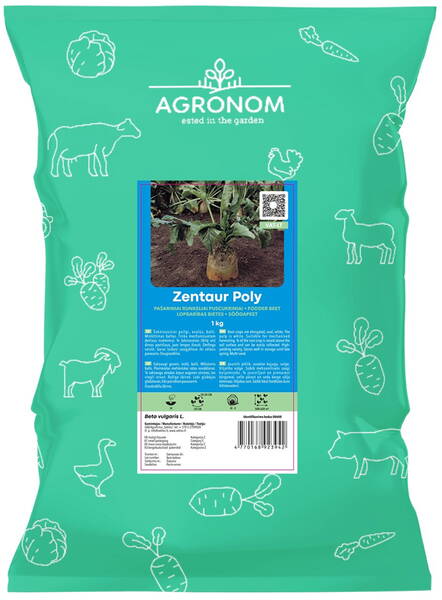
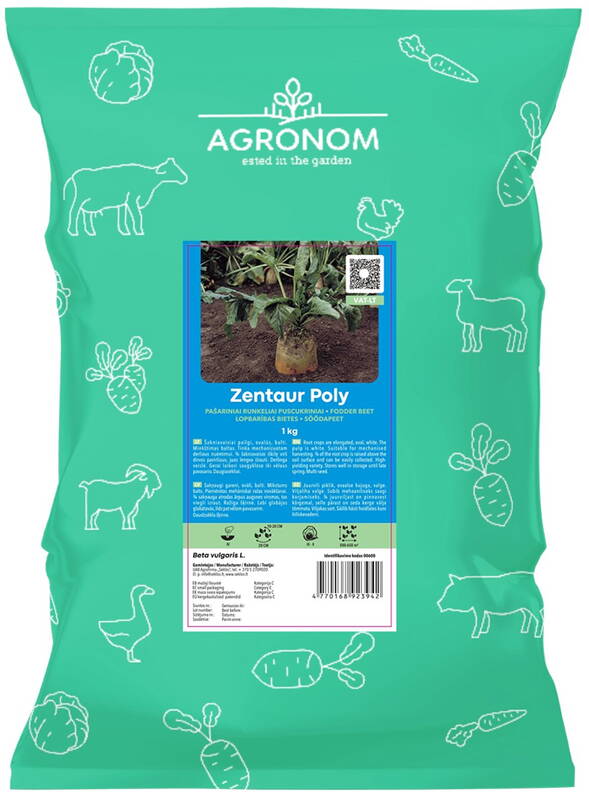
Fodder beet "Zentaur Poly" (1000 g)
Prof Pack
Beta vulgaris L. var. Crassa Mansf.
21.01€
Ex Tax: 16.95€
Ex Tax: 16.95€
Fodder Beet (Semi-sugar) "Zentaur Poly".
Beta vulgaris L. var. Crassa Mansf.
A multi-germ, semi-sugar variety. Offers the perfect balance between the bulk yield of fodder beets and the energy content of sugar beets.
Timing: Ready for harvest 145-160 days after sowing (harvest before frost).
Root Characteristics:
* Appearance: Massive (1.2–2.7 kg), elongated-oval shape, white color.
* Cleanliness: Shallow root groove and lack of side branches mean the beet comes out clean with little soil adhesion.
* Growth Habit: The root is submerged 60% in the soil. This provides excellent drought resistance while remaining easy to harvest manually.
* Flesh: White, dense, with high dry matter and sugar content.
Variety Advantages:
1. Health: Resistant to bolting (flowering) and Cercospora leaf spot.
2. Hardiness: Grows in almost any soil condition and is drought-tolerant.
3. Storage: Excellent shelf life. Stores well in cool conditions (+0+4°C) until May with minimal losses.
Cultivation:
Sow in May when soil temperature reaches +20+22°C. Depth 3 cm. Spacing 20x45 cm.
Usage:
High-energy feed for livestock and poultry. Increases milk yield. Tops can be fed fresh or ensiled.
Beta vulgaris L. var. Crassa Mansf.
A multi-germ, semi-sugar variety. Offers the perfect balance between the bulk yield of fodder beets and the energy content of sugar beets.
Timing: Ready for harvest 145-160 days after sowing (harvest before frost).
Root Characteristics:
* Appearance: Massive (1.2–2.7 kg), elongated-oval shape, white color.
* Cleanliness: Shallow root groove and lack of side branches mean the beet comes out clean with little soil adhesion.
* Growth Habit: The root is submerged 60% in the soil. This provides excellent drought resistance while remaining easy to harvest manually.
* Flesh: White, dense, with high dry matter and sugar content.
Variety Advantages:
1. Health: Resistant to bolting (flowering) and Cercospora leaf spot.
2. Hardiness: Grows in almost any soil condition and is drought-tolerant.
3. Storage: Excellent shelf life. Stores well in cool conditions (+0+4°C) until May with minimal losses.
Cultivation:
Sow in May when soil temperature reaches +20+22°C. Depth 3 cm. Spacing 20x45 cm.
Usage:
High-energy feed for livestock and poultry. Increases milk yield. Tops can be fed fresh or ensiled.