


Your shopping cart is empty!
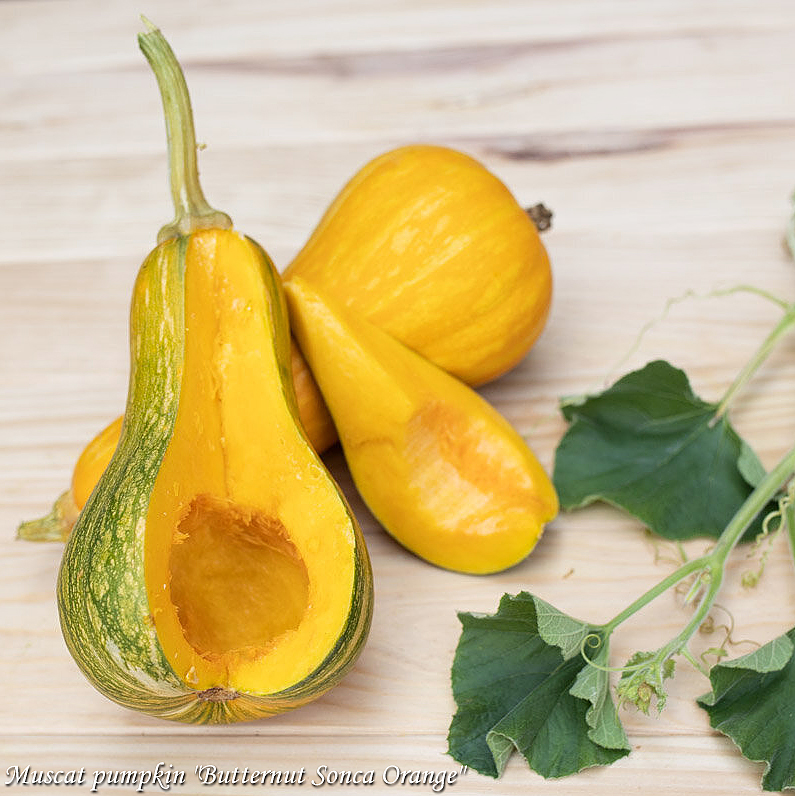
Muscat pumpkin "Butternut Sonca Orange"
Eco seeds
Cucurbita moschata (Duchesne ex Lam.) Poir.
3.90€
Ex Tax: 3.15€
Ex Tax: 3.15€
Muscat pumpkin "Butternut Sonca Orange" (winter squash).
This relatively little-known heirloom variety, originating from Hungary, produces magnificent fruits weighing from 1.5 to 2 kg, featuring dense orange flesh and a pronounced nutty aroma.
In Hungarian, it is known as Soncatök (ham-pumpkin).
This relatively little-known heirloom variety, originating from Hungary, produces magnificent fruits weighing from 1.5 to 2 kg, featuring dense orange flesh and a pronounced nutty aroma.
In Hungarian, it is known as Soncatök (ham-pumpkin).
Maturity: mid-season.
Diameter: 15 cm.
Shape: bottle-shaped (bell/pear).
Texture: dense and firm.
Flesh color: orange.
Flower characteristics: edible.
Fruit size: approx. 30 cm in length.
Plant habit: vining (climbing).
* Pumpkin and squash surpass many vegetable crops in their content of carbohydrates, pectins, vitamins, and mineral salts. They are highly valued as a dietary product. The best culinary pumpkins are undoubtedly the butternut and muscat types (Cucurbita moschata).
MUSCAT pumpkins originate from the tropical coastal regions of Central America and Mexico.
The Cucurbita moschata species includes six subspecies:
- Turkmen (slightly segmented)
- Japanese (deeply segmented, heavily wrinkled, or warty)
- Mexican (woody rind, sweet starchy flesh)
- Colombian (pepper-shaped fruits)
- North American (small to medium fruits, oblate to cylindrical)
- Indian (very large, brightly colored fruits, spherical and oval).
An interesting botanical feature of muscat pumpkins is the presence of aerenchyma — white or silvery spots on the leaf surface. Aerenchyma reflects some of the sunlight, helping the plant reduce water loss.
Muscat pumpkin varieties are exceptionally rich in carotene (up to 26 mg per 100 g of raw weight). Most of them are late-ripening. There are medium and long-vining varieties (vines up to 4–6 m).
The widespread cultivation of muscat pumpkins in northern latitudes is somewhat hindered by their need for warmth. However, this pumpkin ripens perfectly even in the cooler summers of Estonia, provided it is grown through seedlings (sowing seeds in pots around April 20-25, and planting out after the spring frosts on June 4–6, when the plants already have 2-3 true leaves).
It is crucial to harvest this pumpkin before the first autumn frosts. Muscat pumpkins store exceptionally well; under the right conditions, they can be kept until June.
The seeds of muscat pumpkins are edible, but rarely eaten. Unlike other types of squash, the seeds are very small and have a tough, hard shell. Moreover, the fruit contains relatively few of them. They are located entirely in the lower (bulbous) part of the fruit, leaving the rest as solid, tender flesh.
The fruits are predominantly cylindrical or bottle-shaped. The rind color until autumn is mostly green with intermittent stripes, or sometimes light beige. Upon ripening, the background lightens to a creamy or yellowish-beige, and the netted pattern takes on a dull orange hue. Immediately after harvesting, the flesh is pale (beige or light orange) with a mild musky aroma and a rather bland taste. But during storage, the flesh acquires a deep orange hue, the musky aroma intensifies significantly, and the sugar content increases.
When grown in conditions like those in Estonia, full culinary maturity is reached after at least 2 months of curing in storage post-harvest.
The fully ripened flesh is loaded with carotene, incredibly delicious, healthy, and completely edible even raw.
While some might think its sweetness makes it unsuitable for savory dishes, modern chefs love to roast butternut squash with herbs, garlic, and olive oil as a fantastic side dish for meat! It is also absolutely perfect for porridges, pies, casseroles, candied fruits, juices, and jams (it can be added to fruit preserves to improve texture). However, with ultra-long storage (over 5-6 months), the flesh can break down into fibers, losing its exquisite sweetness and flavor. Such over-stored pumpkins are best used immediately for processing or purees.