

Your shopping cart is empty!
Auricula primrose (Bear's ears) variety mix
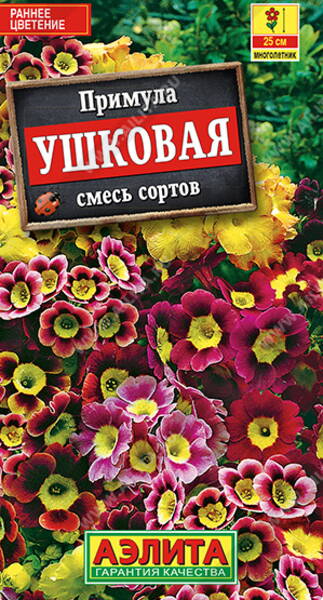
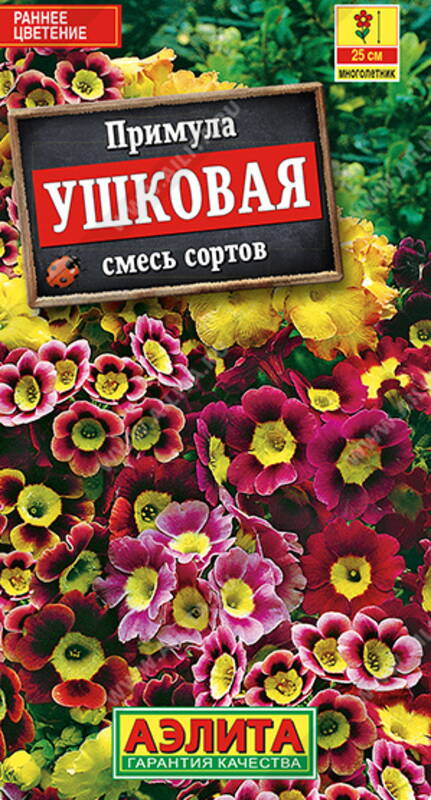
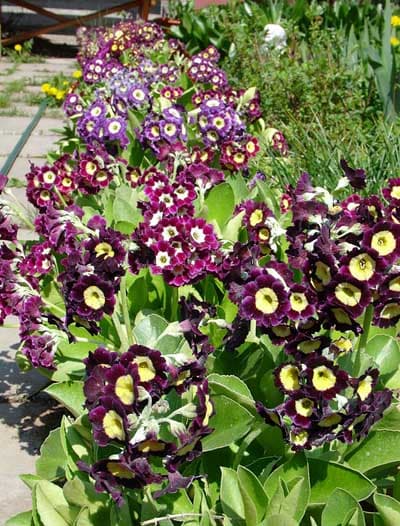
Auricula primrose (bear's ears, mountain cowslip variety mix) - Primula auricula.
A most beautiful spring flower!
A rhizomatous rosette perennial 20-25 cm high. The leaves are leathery and evergreen. Inflorescences are umbellate, consisting of 5-20 flowers with a delicate fragrance. Blooming is early, prolonged (April-May), and abundant – mature plants produce up to 10 peduncles. Plants are placed in sunny spots or in the partial shade of trees with sparse crowns. A winter-hardy species. It easily tolerates short-term drought.
Seeds are sown outdoors before winter, in late October, or for seedlings in early spring. Sowing is superficial, without covering. For spring sowing, a two-week stratification of seeds is desirable.
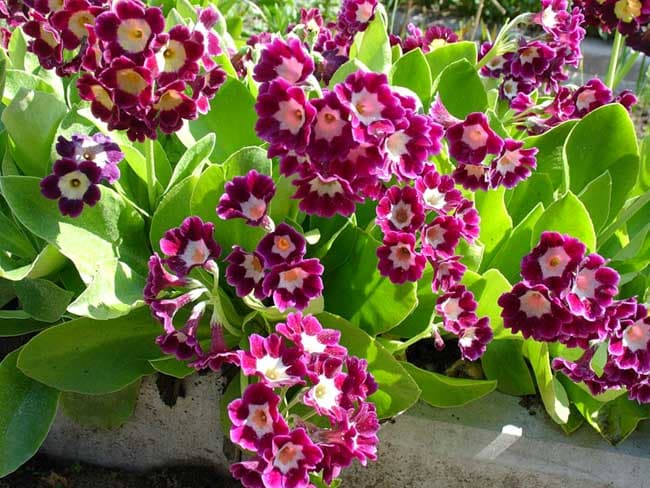
A most beautiful spring flower!
A rhizomatous rosette perennial 20-25 cm high. The leaves are leathery and evergreen. Inflorescences are umbellate, consisting of 5-20 flowers with a delicate fragrance. Blooming is early, prolonged (April-May), and abundant – mature plants produce up to 10 peduncles. Plants are placed in sunny spots or in the partial shade of trees with sparse crowns. A winter-hardy species. It easily tolerates short-term drought.
Seeds are sown outdoors before winter, in late October, or for seedlings in early spring. Sowing is superficial, without covering. For spring sowing, a two-week stratification of seeds is desirable.
* In the spring flood of early flowers, alongside bulbous plants, primroses (Primula) occupy a special place, and primarily the Auricula (Primula auricula) — a plant with thick, bluish-pubescent leaves (truly resembling the shape of an ear) and caps of large flowers in both bright and pastel colors.
In nature, Primula auricula is found in the mountains of Southern and Central Europe, most often on calcareous soils. Its flowers have a yellow color of various shades with an eye in the middle. It is this primrose, or rather its numerous varieties, often simply called auriculas, that have recently become extremely popular among amateur gardeners. Due to their vast numbers and great diversity, all varieties have been divided into several groups.
The cultivation of primroses, including auriculas, is not complicated.
By nature, auriculas are children of the cool Alpine climate.
In summer, they feel good in light partial shade, but in full sun they become smaller and grow poorly. They require drained, moderately moist soils (show group auriculas prefer an alkaline reaction).
Plants are fed in the spring, starting from the moment of regrowth, once a week with mineral fertilizers predominating in phosphorus, while edged group auriculas require more nitrogen (to enhance the brightness of the petal tips). Pubescent auriculas must be protected from heavy rains that spoil the flowers. Particularly delicate varieties are best grown in cold greenhouses, in pots with a diameter of 10 cm.
Auriculas must be protected from pests (slugs, various caterpillars, red spider mites), as well as from fungal infections, especially grey mold (Botrytis). To prevent this disease, it is necessary to regularly remove faded flower stalks, old and diseased leaves, treat plants with fungicides, and divide overgrown bushes every two years.
Auriculas are propagated by seeds, division of bushes, and rosette cuttings.