


Your shopping cart is empty!
Pumpkin "Berrettina"
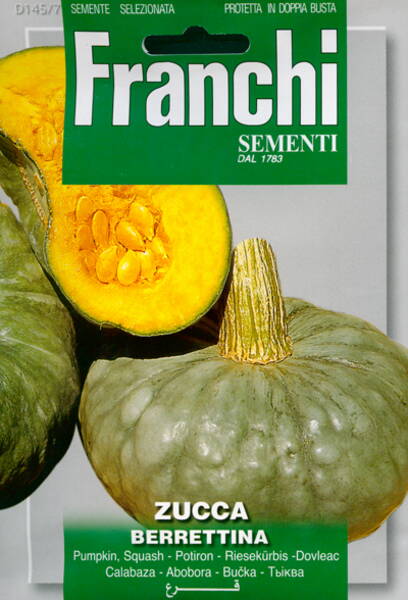
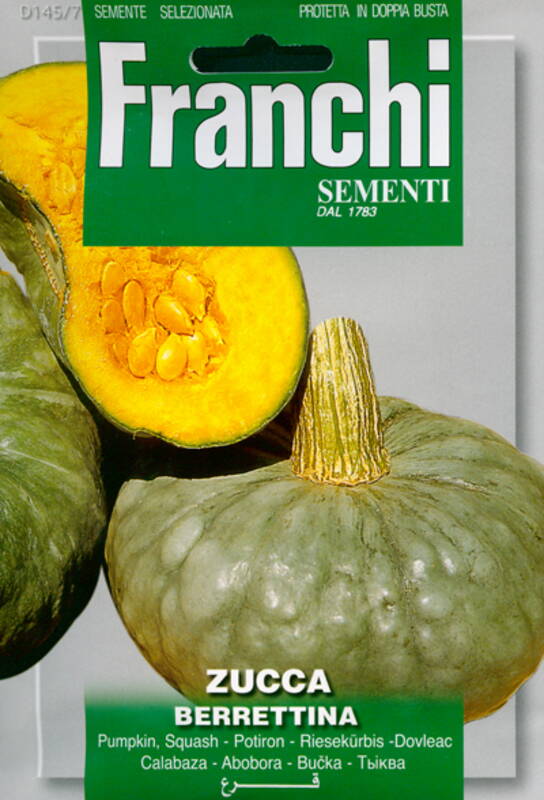
Pumpkin "Berrettina".
A diet-friendly delight!
Mid-early portion pumpkin variety (97–105 days). The plant is vining. Fruits are flattened-round with a strongly wrinkled gray-green rind, weighing 5–7 kg.
The flesh is yellow, thick, firm, juicy, and incredibly sweet (by December the sugar content reaches 10% !).
Sunny southern slopes with fertile soil are preferred for cultivation.
Variety value: original decorative fruit shape, excellent taste that remains unchanged during long storage, and good transportability.
Recommended for fresh use, boiling, stewing, and canning. Essential for dietary and лечебное nutrition.
A diet-friendly delight!
Mid-early portion pumpkin variety (97–105 days). The plant is vining. Fruits are flattened-round with a strongly wrinkled gray-green rind, weighing 5–7 kg.
The flesh is yellow, thick, firm, juicy, and incredibly sweet (by December the sugar content reaches 10% !).
Sunny southern slopes with fertile soil are preferred for cultivation.
Variety value: original decorative fruit shape, excellent taste that remains unchanged during long storage, and good transportability.
Recommended for fresh use, boiling, stewing, and canning. Essential for dietary and лечебное nutrition.
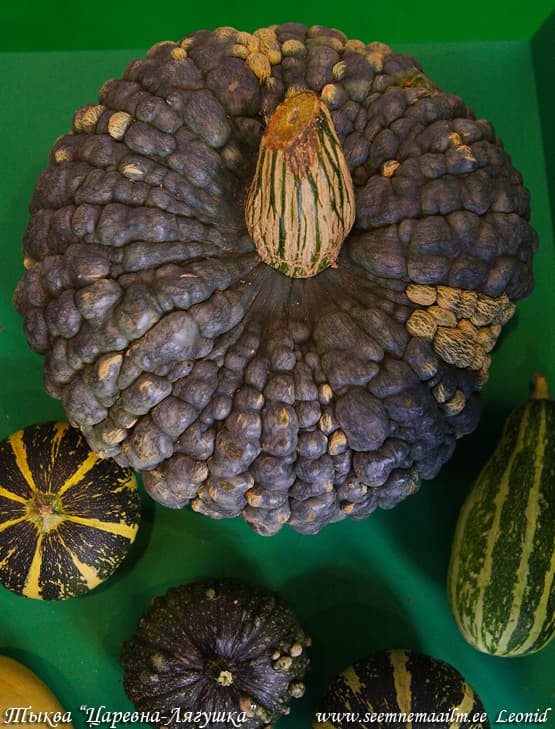
* Pumpkin is a tropical vine.
It grows especially well in medium-humus soils. Wet clay areas are completely unsuitable for this crop.
In gardens, pumpkins are placed on the south side of walls and solid fences to protect them from cold morning frosts. They are grown from pre-sprouted seeds or 15–25-day-old seedlings. Planting rows are separated by a two-meter strip, and within a row plants are spaced one meter apart. In a dry summer, pumpkins should be watered as often as possible. The best fertilizer is manure.
On heavy and infertile soils, seeds or seedlings are planted in fertilized holes. The holes are dug 25–30 cm deep, then filled almost to the top with humus, watered, and only then are sprouted seeds or seedlings placed into the recess. In northern regions, manure is needed under plantings for biological warming. To obtain good fruits, no more than two or three ovaries are left on one plant, and the main stem is pinched above the third leaf after the last fruit kept. Excess side shoots are removed. Vines and shoots are pinned down with hooks and covered with soil. A small board or piece of plywood is placed under each fruit to protect it from rotting. Mature pumpkins are cut with the stem attached.