


Your shopping cart is empty!
Pumpkin "Danka Polka"
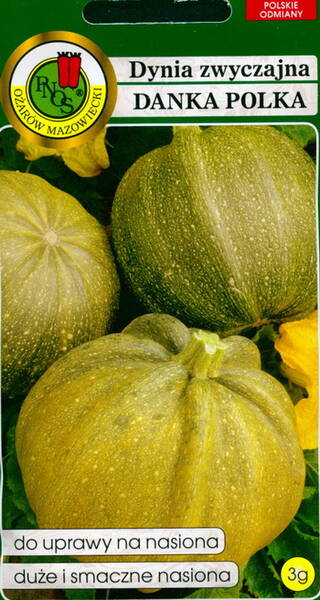

Pumpkin "Danka Polka".
A bush-type pumpkin variety. Fruits are round, weighing 5–8 kg. Fruits store well until December. 1 g = 2–5 seeds.
A bush-type pumpkin variety. Fruits are round, weighing 5–8 kg. Fruits store well until December. 1 g = 2–5 seeds.
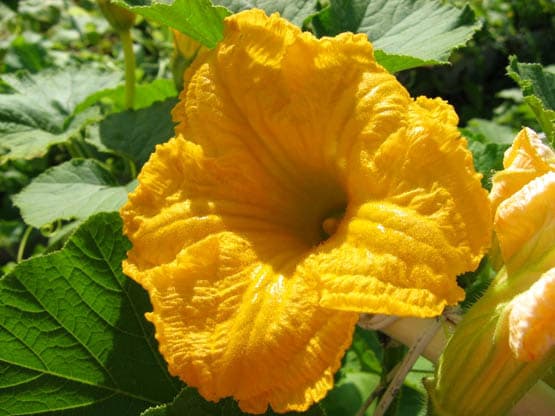
Pumpkin is an annual plant. Its stem can be creeping or upright (bush forms). In vining forms, runners reach 2–5 m. Leaves are large with long petioles. Flowers are unisexual with a strong scent. The pollen is heavy and is not carried by wind; pollination is mainly done by bees. The fruit surface may be smooth, ribbed, bumpy, or warty. The flesh is juicy and thick, with color ranging from light cream to orange.
Pumpkin is a heat-loving crop, but it is less demanding of warmth than cucumber. Seeds begin to germinate at temperatures above +14°C. For vigorous growth, +25 to +28°C is optimal; it also grows reasonably well at +20 to +25°C. Even light frosts are not tolerated. In cold snaps, or when planted into cold soil, the root system can be affected by rots and die back. The plant forms a large leaf area and uses a lot of water, so regular watering is needed. Water generously (10–15 L per plant), especially while vines are growing and fruits are forming.
Pumpkin is demanding of soil fertility. Some roots penetrate 2–3 m deep, while most roots are located in the topsoil (20–25 cm). Choose well-warmed sites sheltered from northern winds, with soil rich in organic matter and mineral nutrients. Pumpkin grows best on sandy loam, loam, peat soils, and chernozem. It does not tolerate heavy clay or waterlogged soils. It is not recommended to apply lime directly for pumpkin; lime the plot under the preceding crop instead. Plant pumpkin after cabbage, onion, potato, and root vegetables. Do not plant after cucumbers, zucchini, or pattypan squash. Pumpkin is light-loving and ripens best in full sun; shading reduces yield and fruit quality.
The homeland of pumpkin is Central and South America. Pumpkin was grown in Mexico 5,000 years ago; its seeds have been found in ancient Peruvian tombs. Pumpkin was also cultivated in Ancient Egypt, India, and China. In Europe, this crop appeared in the mid-16th century.
Three pumpkin species are commonly grown: large-fruited, butternut, and hard-rind types.
Large-fruited pumpkins grow well in temperate regions; some specimens reach up to 90 kg. They are the most cold-tolerant, though later-maturing than hard-rind types, and store well, keeping good flavor for up to 9 months.
Hard-rind (common) pumpkins are earlier, but their fruits are smaller than those of other species. The most common form is egg-shaped with bright yellow to yellow-orange color and striped pattern. The rind of ripe fruits is hard; leaves, stems, and peduncles are covered with prickly spines.
Butternut pumpkins are considered the tastiest; their rind hardens slowly. They require much more heat than other types.
The pumpkin fruit is often called a berry. It is a juicy fruit containing many seeds inside. Pumpkin is the largest “berry”.
Pumpkin fruits are used not only for food but also to make vessels, containers for storing liquids and bulk materials, and musical instruments.
Above all, pumpkin is one of the best food plants. In calories it is comparable to cauliflower. Pumpkin flesh contains up to 25% dry matter, up to 20% starch, and up to 15% fat. Pumpkin is rich in pectins. It contains more iron than many other vegetables, so it is traditionally recommended for low hemoglobin. Pumpkin is also a source of vitamins E, T, C, B1, B2, B5, and carotenoids, and it is high in mineral salts such as potassium, calcium, magnesium, iron, copper, cobalt, and others.
Pumpkin is eaten raw; it is baked, fried, steamed, and stewed. Pumpkin is used for drinks, jams, and candied fruit. It is traditionally noted that pumpkin flesh supports the gastrointestinal tract, promotes bile flow, and helps regulate water and salt balance. It is often recommended raw or cooked for people with cardiovascular conditions, edema, liver or kidney issues, salt-balance disorders, and constipation.
“Milk” made from pumpkin seeds and hemp seeds is a traditional remedy for liver and bladder ailments.
Pumpkin juice is used traditionally as a mild diuretic and choleretic; in small amounts it is said to help with insomnia.
Pumpkin seeds have long been used traditionally against tapeworms.
Pumpkin stores well in winter even at room temperature, providing vitamins when other vegetables are scarce.
In urological practice, a preparation from pumpkin seeds (oil extract) is widely used for prevention and support in prostate conditions.
Pumpkin fruits are also an excellent feed for livestock.