


Your shopping cart is empty!
Beetroot "Monorubra"
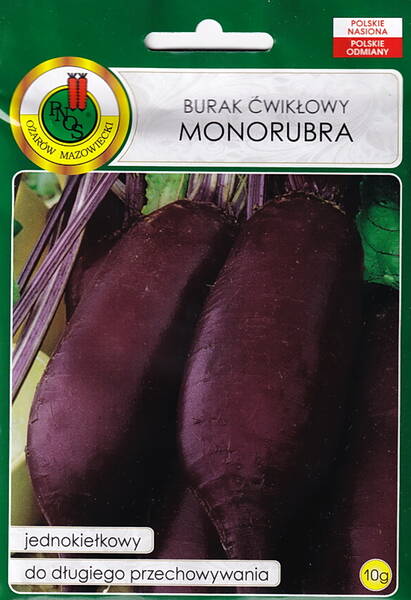
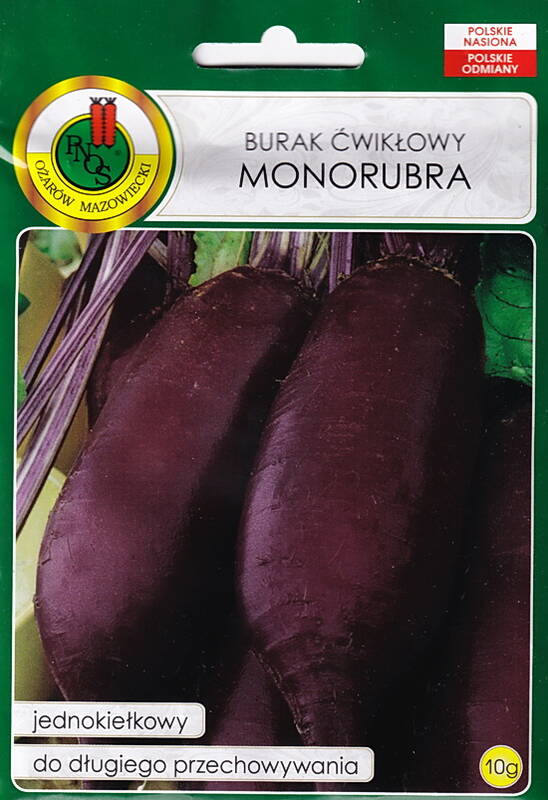
Beetroot "Monorubra".
Monogerm (single-germ) variety - no thinning required!
Mid-season variety: 110-130 days. Root weight 180-350 g. Deep dark red colour, no rings. Optimal germination temperature +18 +20°C. Stores very well throughout the winter.
1.0 g = 40-55 seeds.
Monogerm (single-germ) variety - no thinning required!
Mid-season variety: 110-130 days. Root weight 180-350 g. Deep dark red colour, no rings. Optimal germination temperature +18 +20°C. Stores very well throughout the winter.
1.0 g = 40-55 seeds.
* Beetroot is a valuable vegetable crop. Beetroots store well, so they can be consumed fresh all year round.
Beets are relatively drought-resistant and not very demanding of soil fertility. Increased need for moisture is only in the initial stage of growth. At the same time, beets do not tolerate waterlogging — root crops acquire an unpleasant taste, and plants become prone to diseases.
Soil preparation.
In autumn, the soil is deeply dug up, with superphosphate and potassium sulphate (or wood ash) added. In spring, the soil is lightly loosened. Beets should be placed 2-3 years after the application of fresh manure. Sowing time is mid-May.
Usually, beet seeds are aggregate fruits (clusters) of 3-5 flowers, so seedlings appear in "nests" and require tedious thinning. However, Monorubra is a monogerm variety: one seed produces one sprout, saving you time and effort.
Optimal soil temperature for germination is +11°C. At temperatures below +4°C, seeds do not germinate. Seedlings withstand frost down to -3-4°C, but mature roots tolerate only down to -1-2°C. If frozen, they rot during storage.
Water and Light.
With a lack of moisture, the flesh of the root crop becomes coarse. Beets grow very poorly with excess moisture and soil acidification (so do not sow on heavy, acidic, swampy soils).
Beets are very demanding of light. In the shade or with severe overcrowding, plants stretch out and form very small roots. High doses of nitrogen fertilizers are not recommended, as beets accumulate nitrates.
Care tips.
If growing standard multigerm beets, thinning is mandatory (first at 1-2 cm, then at 6-8 cm).
Regular watering is necessary during root formation. If there is a long break in watering, the tissues harden, and when watering resumes, the roots crack.
Yellow spots on leaves indicate acidic soil and potassium deficiency. Water with lime milk mixed with potassium chloride.
Transplanting secret.
You can grow beets via seedlings! Sow thickly in a nursery bed. When 2-3 true leaves appear, carefully transplant to the main bed (spacing 8-10 cm). Shade from the sun for the first few days. Beets transplant perfectly and can be used to fill gaps in the garden or as a border crop.
Harvesting.
Roots are harvested late in autumn before frost. Cut off leaves carefully without damaging the head.
Why isn't beetroot always sweet?
Reasons: poor seeds or improper farming.
1. Beets hate acidic soil. Wood ash (3 cups per 1 m²) feeds and deacidifies the soil.
2. In dry, hard soil, roots become bitter.
3. The secret of sweetness: ordinary table salt increases the sugar content of beets. Try watering with this solution: 1 teaspoon of salt per bucket of water (per 1 m²).