


Your shopping cart is empty!
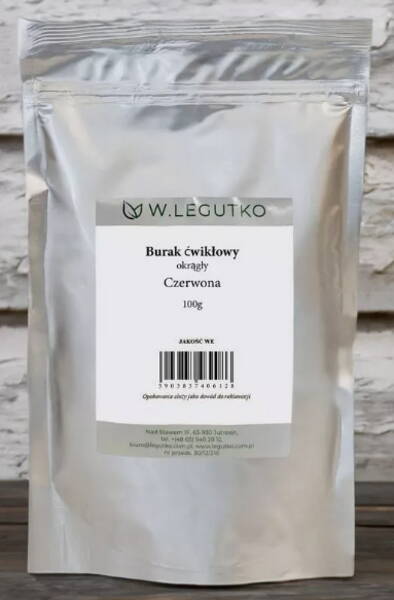
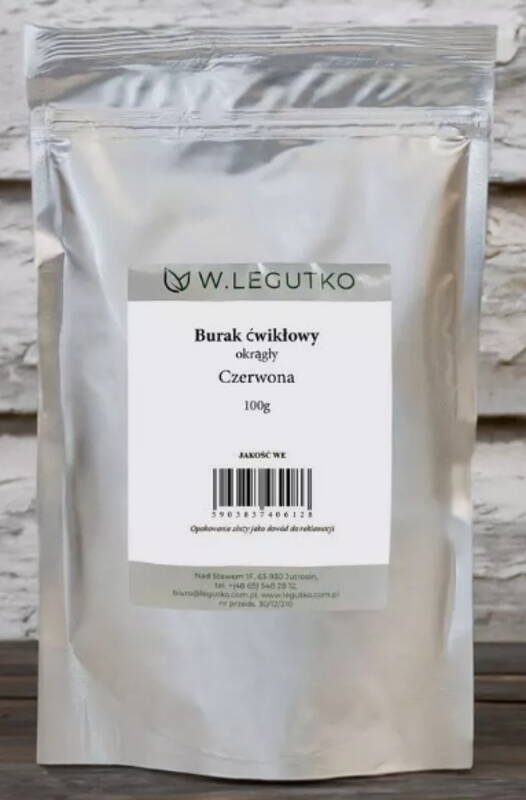
Beetroot "Rote kugel 2" (100 g)
Prof Pack
Beta vulgaris var. conditiva Alef.
4.77€
Ex Tax: 3.85€
Ex Tax: 3.85€
Beetroot "Red ball 2" (Rote kugel 2).
Early productive variety. The period from germination to the beginning of economic suitability is 65-90 days.
Root crops are rounded, weighing 220-500 g.
The pulp is juicy, sweet, dark red with a purple tint. No ringing. Taste is high. Good storage quality.
Advantages of the variety: cold-resistant, not prone to flowering. Normally tolerates lack of moisture.
1,0 g = 40-60 seeds.
Early productive variety. The period from germination to the beginning of economic suitability is 65-90 days.
Root crops are rounded, weighing 220-500 g.
The pulp is juicy, sweet, dark red with a purple tint. No ringing. Taste is high. Good storage quality.
Advantages of the variety: cold-resistant, not prone to flowering. Normally tolerates lack of moisture.
1,0 g = 40-60 seeds.
* Harvesting and storage of beets.
More sugar accumulates in root crops in dry sunny autumn when the nights become cool.
Closer to harvest, watering is stopped, which leads to an intensive accumulation of sugar. But if the autumn is very dry, then a week before harvesting, the plants need to be watered to avoid wilting of the root crops.
Harvesting is carried out in such a way as to prevent them from freezing. This is especially dangerous for varieties with cylindrical roots.
In the middle lane, beets begin to be harvested, depending on the weather (in the third decade of September and earlier). To improve storage conditions, beets are recommended to be piled in a cellar with sand, alternating layers of sand with root crops. The temperature should not fall below zero.
Important: when harvesting, do not cut the leaves too close to the root crop: leave three to six centimetres so that the juice does not flow out.
Signs of nitrogen starvation in plants are slow development, stunting and pale green leaves.
With a lack of phosphorus, growth stops and the formation of the root crop is delayed, the leaves become smaller.
A lack of potassium is indicated by a slowdown in growth, the appearance of spotted browning on the leaves, and death from the top and edges of plants.
With a lack of manganese, black spots are observed on the leaves (mistaken for a disease) and then the leaf plate dies off and twists.
Copper deficiency (on peat soils) causes root rot.
Boron reduces root damage by dry rot.
Top dressing with a 1% solution of table salt increases the sugar content of root crops.
The first feeding is carried out when a pair of leaves appears with mullein, diluted 4-5 times or 8-10 times with bird droppings.
The second - after 2-3 weeks with a solution of wood ash at the rate of 500 g per 10 liters of water.
* Scientific research has confirmed the high medicinal properties of red beetroot.
It has been established that the fiber, malic, citric, and other biogenic acids contained in beetroot enhance intestinal peristalsis; betaine promotes the breakdown and assimilation of dietary proteins and actively participates in the formation of choline, which increases the vitality of liver cells. Therefore, it is recommended for chronic constipation, digestive disorders, and liver diseases to consume it boiled on an empty stomach, 100-150 grams per day.
Beetroot juice, especially when mixed in equal parts with carrot and radish juice, helps with anemia and is generally a restorative remedy that improves metabolism. Mixed with honey, beetroot juice is used for hypertension and as a sedative.
The relatively high content of iodine and magnesium makes beetroot essential in the diet of the elderly and patients suffering from atherosclerosis. But the most amazing is the effect of red beetroot on cancer cells.
In a book published in Heidelberg — an ancient university center in Germany — "Red Beetroot as an Adjuvant Therapy in Patients with Malignant Tumors", A. Ferenczi describes 28 cases of healing in patients with stomach, lung, rectal, and bladder cancer using grated raw beetroot and its juice. In all of them, except one, objective signs of an improvement in their general condition appeared after two to four weeks: a decrease in temperature and ESR (erythrocyte sedimentation rate), weight gain, improvement in blood composition, and a reduction or disappearance of the malignant tumor.
Further scientific studies have shown that the basis containing the substance affecting cancer cells are anthocyanins — coloring compounds from the group of plant phenols. It turned out that anthocyanins from other plants — blueberries, blackcurrants, black elderberries, St. John's wort, and red wine — are also able to halt the development of cancer cells.
However, according to experiments, red beetroot acts eight times more effectively. But since not everyone can tolerate and digest beetroot juice, other fruits and herbs can aid anthocyanins in this treatment. Moreover, they must be in their natural composition — isolated pure anthocyanins, as shown by special studies conducted by the Pharmaceutical Institute in Budapest, do not possess medicinal properties. Neither boiled beetroot nor boiled beetroot juice possess them, or they have too little efficacy. Fresh juice, as it turns out, is three times more effective than stagnant juice.
To this, the following can be added. It is a good idea to keep freshly squeezed beetroot juice in the refrigerator for about three hours; after that, it is absorbed much better by the body (of course, after the refrigerator, the juice should be warmed to room temperature).
Thus, beetroot is an extraordinary vegetable with medicinal properties. Eat more of it boiled, if possible make a salad adding fresh beetroot, drink the juice, and you will be protected from many serious diseases.
Beetroot also helps in the case of radiation damage — it has the ability to remove radioactive substances from the body (boiled beetroot also retains this ability). Red beetroot also removes poisons and heavy metals (such as lead and mercury) from our bodies.