


Your shopping cart is empty!
Radish "Lucynka" (for childrens) seeds on tape
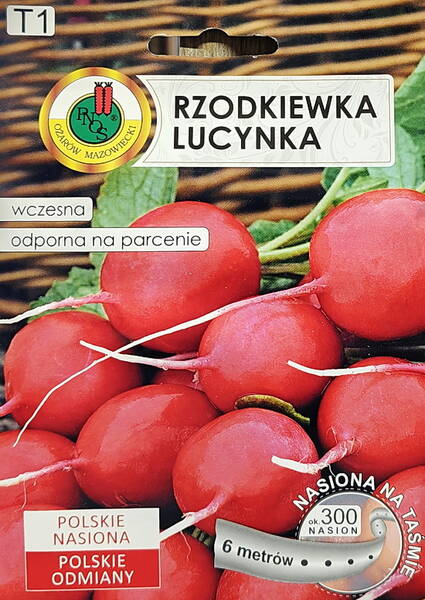
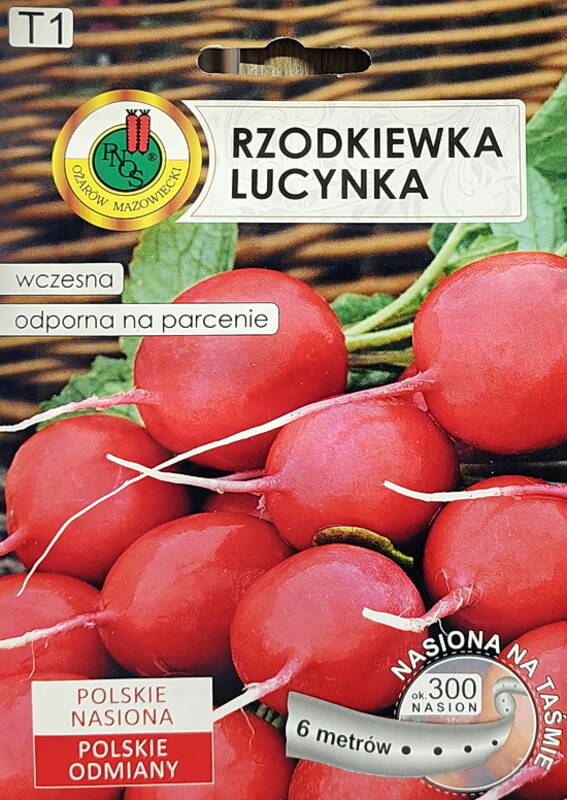
Children's Radish "Lucynka" (seeds on tape).
Especially tender - nature's candy for fresh salads.
Root crop of elliptical shape, carmine-red colour. Flesh is white, semi-translucent.
Shiny and bright, these radishes look like the round lollipops loved by all kids.
Their juicy, dense flesh with an amazing mild, non-spicy taste seems to exist specifically for picky eaters.
Sow several beds with an interval of 10 days - and you don't have to worry that someone won't get a tasty bite...
Attention: do NOT soak the tape before sowing! Lay dry tape into moist soil.
Growing conditions.
Sowing when the soil warms up to +10°C, seeding depth 1.5 cm. Grows well on any soil that is not too heavy.
The best quality root crops are obtained in sunny and sufficiently moist areas.
Sowing: April - May.
Harvesting: May - June.
Especially tender - nature's candy for fresh salads.
Root crop of elliptical shape, carmine-red colour. Flesh is white, semi-translucent.
Shiny and bright, these radishes look like the round lollipops loved by all kids.
Their juicy, dense flesh with an amazing mild, non-spicy taste seems to exist specifically for picky eaters.
Sow several beds with an interval of 10 days - and you don't have to worry that someone won't get a tasty bite...
Attention: do NOT soak the tape before sowing! Lay dry tape into moist soil.
Growing conditions.
Sowing when the soil warms up to +10°C, seeding depth 1.5 cm. Grows well on any soil that is not too heavy.
The best quality root crops are obtained in sunny and sufficiently moist areas.
Sowing: April - May.
Harvesting: May - June.
* Many gardeners face the problem of radishes bolting (going to seed) and flowering - as a result, standard root crops are not obtained.
There are many reasons for this: small old seeds, severe overcrowding of crops, dry soil.
Prolonged exposure of radishes to low temperatures (extended cold spells) also leads to plant bolting, and root crops grow coarse and inedible.
This plant needs to be grown in open sunny places; in the shade, the tops stretch out a lot, and the root crops grow very small and of poor quality.
Radish is a short-day plant, so it should be sown as early as possible in spring, while the days are not yet so long, and at the end of summer (August), when they become shorter again.
The root system of the radish is poorly developed, so it is watered every 2-3 days, and in dry weather - every day (5-8 litres of water per 1 m²).
* Even the ancient Romans knew that radish improves appetite, restores strength after illness, and the juice of this vegetable prevents hair loss.
Salads and desserts were prepared from radishes. Radish with honey was considered a ladies' dessert, and with vinegar and salt — a gentlemen's treat.
Red and white radish varieties were brought to Europe from China in the 13th century by the traveller Marco Polo.
Now there are over 100 varieties of this vegetable in the world.
In many countries, radishes are served for breakfast, keeping in mind that a few slices of this vegetable will provide a boost of energy for the whole day.