


Your shopping cart is empty!
Rosemary (dew of the sea) (10,0 g)
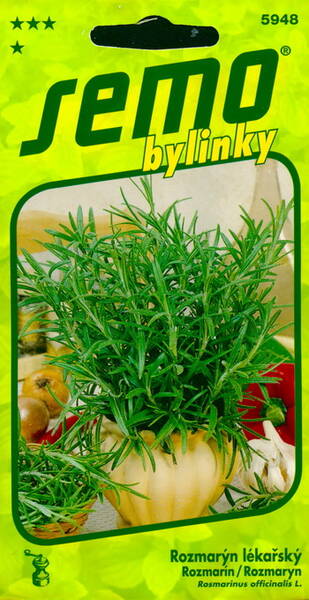
Prof Pack

Rosemary - Rosmarinus officinalis.
A legendary plant, celebrated even in myths - a wonderful find for creating a southern accent in your garden.
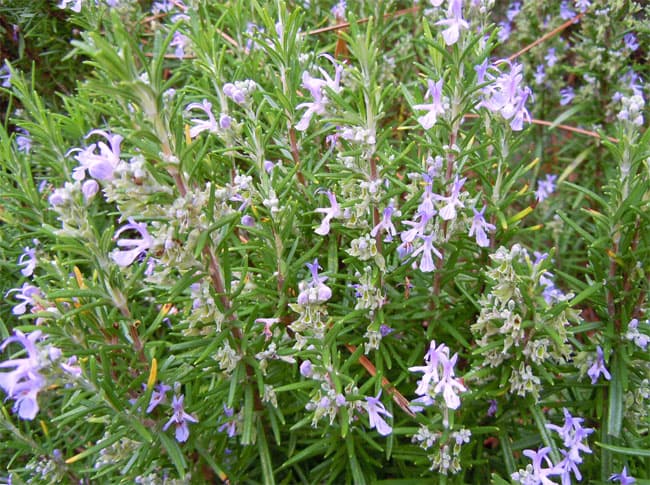
An evergreen shrub from the Lamiaceae family. Plants are about 1-1.5 m high. The leaves are numerous, opposite, leathery on top and pubescent below. The flowers are small, collected in dense purple inflorescences. Melliferous flowers, small, light blue and purple, are located in the axils of the upper leaves. Rosemary blooms from March to May. Secondary flowering in autumn (September-October) is not uncommon. Drought-resistant, light-demanding, and sensitive to frost. In the temperate zone, it is recommended to grow it in pots or tubs. Place in unheated bright rooms for the winter. A small amount of rosemary is added to fruit salads, hot vegetable and meat dishes, and brewed in tea.
In our climate in summer, it is used outdoors in container culture (with wintering in a cool, bright room at a positive temperature).
Agrotechnics.
The plant prefers sunny places and calciferous, well-drained soils. Seeds are sown in February-March in boxes with light soil, covered with a layer of soil 0.3-0.4 cm. At a temperature of +12...+22 °C, shoots appear in a month. Seedlings are pricked out one by one into pots.
1,0 g = 550-750 seeds.
A legendary plant, celebrated even in myths - a wonderful find for creating a southern accent in your garden.
An evergreen shrub from the Lamiaceae family. Plants are about 1-1.5 m high. The leaves are numerous, opposite, leathery on top and pubescent below. The flowers are small, collected in dense purple inflorescences. Melliferous flowers, small, light blue and purple, are located in the axils of the upper leaves. Rosemary blooms from March to May. Secondary flowering in autumn (September-October) is not uncommon. Drought-resistant, light-demanding, and sensitive to frost. In the temperate zone, it is recommended to grow it in pots or tubs. Place in unheated bright rooms for the winter. A small amount of rosemary is added to fruit salads, hot vegetable and meat dishes, and brewed in tea.
In our climate in summer, it is used outdoors in container culture (with wintering in a cool, bright room at a positive temperature).
Agrotechnics.
The plant prefers sunny places and calciferous, well-drained soils. Seeds are sown in February-March in boxes with light soil, covered with a layer of soil 0.3-0.4 cm. At a temperature of +12...+22 °C, shoots appear in a month. Seedlings are pricked out one by one into pots.
1,0 g = 550-750 seeds.
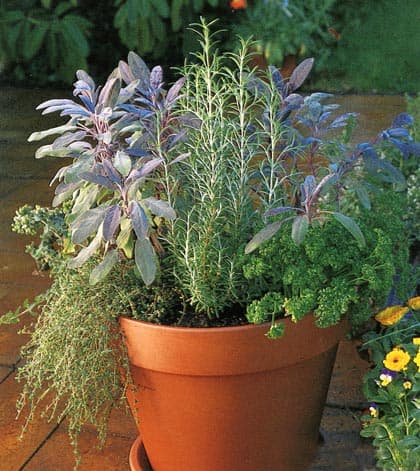
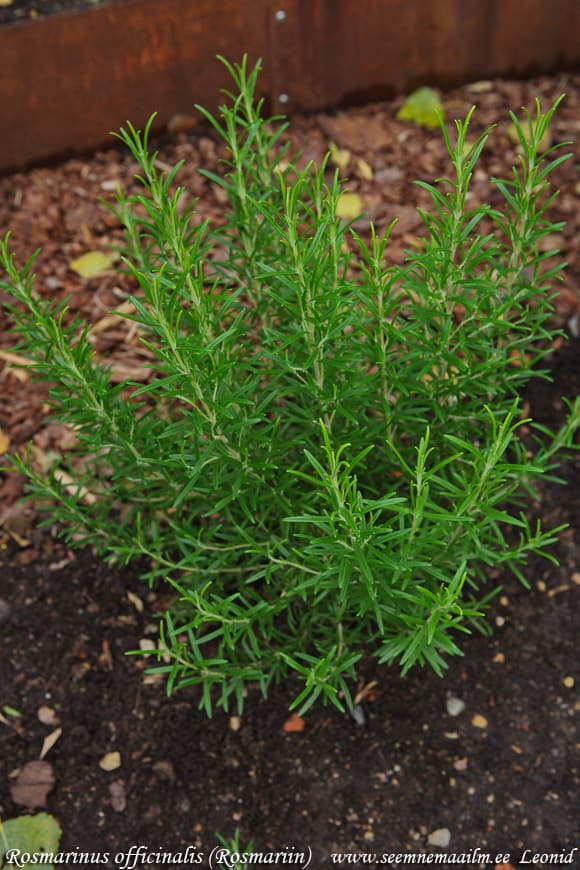
* Outwardly, a rosemary branch resembles a spruce branch with many small leaves similar to flat needles. While fresh, they are soft, and when they dry, they become prickly like spruce needles.
Rosemary leaves consist of two percent essential oils, which are an excellent sedative, as they improve mood and help calm down and relax. It is no coincidence that a few drops of rosemary are added when taking baths, which also has a therapeutic effect.
In addition, it helps to improve memory, therefore taking rosemary is prescribed for students to help during exam sessions, as well as for school children during the school year.
Rosemary has antibacterial properties, has a beneficial effect on the body during a cold. Its volatile substances disinfect the air, get rid of streptococcus, staphylococcus, yeast fungi, E. coli. Dried flowers or sprigs of rosemary can be placed in a sachet bag and hung in the room. It will exude a pleasant aroma for several months.
The aroma coming from rosemary is similar to the smell of pine. It is very rich, pronounced, with a predominance of sweet notes.
The taste of rosemary is spicy and sharp, so it is not surprising that it is very loved by fans of savory food and smells.
In folk medicine, rosemary has found very wide application: it helps with various disorders of the nervous system, as well as with diseases of the gastrointestinal tract. A useful infusion is prepared from rosemary leaves, which is recommended to be consumed for asthma, as well as for various diseases of the upper respiratory tract. In inflammatory diseases of the throat, this infusion should be used for gargling.
In cooking, young rosemary leaves collected from the upper third of the plant's branches and dried are used as a spice (most often rosemary is used crushed).
Rosemary is added to main and first courses, vegetable stews, salads, snacks and side dishes, pates and minced meat as a classic spice - this savory spice is perfect for lamb, pork, poultry and rabbit meat (rosemary gives them an appetizing aroma of game).
Vegetables with rosemary acquire a light and delicate aroma. In restaurants, potatoes are very often prepared with this spice: baked, fried, stewed.
Rosemary is also used as a flavoring agent for oils and salt, it is included in complex spices for meat.
It is not recommended to use rosemary together with bay leaf.
In delicate fish dishes, rosemary is often inappropriate, because the thick camphor note of the spice "interrupts" the subtle smell of fish, and becomes dominant.
Remember that rosemary is one of the strongest spicy seasonings, so you should not abuse it.
Attention!
Rosemary is contraindicated for pregnant women, as it has an abortifacient effect. It is also not recommended for patients with hypertension, as it increases blood pressure, and for people prone to seizures. If the oil of this plant gets on the skin, a burning effect and even a feeling of dizziness are very likely to occur (this applies to people with hypersensitive skin).
Pharm.: folia anthos, folia roris marini.
Recipe: a small amount of dried rosemary leaves is mixed with parsley and ground with butter.
The resulting paste is laid in small portions inside the carcass of a chicken, turkey, duck, goose, salt is added and then baked in the oven until tender.
* Rosemary - a popular essential oil plant since antiquity; the Greeks dedicated it to the goddess Venus. It was believed that charming rosemary makes a person cheerful and happy, relieves bad dreams and preserves youth. For a long time, it has been a favorite spice in Mediterranean countries.
In the wild, rosemary is found in Southern Europe. In regions with a warm climate, rosemary grows in open ground in one place for up to 20 years, reaching a height of 2 meters. Tall rosemary bushes are often grown in hedges, and creeping forms - on an alpine slide.
Rosemary (Rosmarinus) - a hardy evergreen, non-frost-resistant shrub of the Lamiaceae family with small leathery leaves and racemose inflorescences of blue, white or pink flowers. An essential oil used in perfumery and medicine is obtained from the fragrant needle-like leaves and flowering shoots of rosemary. Flowers and leaves are also used as a spice in cooking (infusing wine and vinegar, as a savory seasoning for meat and marinades), for baths and as an insecticide (anti-moth agent). In folk medicine, rosemary is a good remedy for weak digestion and headaches, heart weakness, liver diseases and metabolic disorders; it has a stimulating effect on blood circulation.
Light-loving and heat-loving rosemary is unpretentious in growing, but does not like sharp temperature fluctuations and water stagnation from excessive watering, shedding leaves. For the summer, it is desirable to transplant rosemary from a pot into the garden (in a sunny, warm place protected from the wind) or take it out to a sunny balcony so that the essential oil content does not decrease. In the heat, rosemary requires abundant watering; with a lack of moisture, its lower leaves turn yellow. During the period of mass flowering, young shoots densely covered with hairs with leaves and flowers are cut from rosemary, using them for processing and drying. In spring, autumn and winter, rosemary is kept on a bright windowsill in a cool room (fresh coolness in winter at a temperature of 5-15 degrees ensures the compactness of the bush and abundant flowering); watering is regular, moderate.
The rosemary bush is trimmed in the spring for good tillering, leaving 3-4 internodes of the previous year's growth. If the stems of adult rosemary become bare, then in February-March rejuvenating pruning is carried out (usually every 7 years), cutting off the shoots at the ground surface. Large rosemary bushes can winter in a cold greenhouse or conservatory, a dry cellar or basement.
If rosemary is not planted in the garden for the summer, then, if necessary, in early spring it is transplanted into a fresh substrate; usually transplanted after 2 years, but with a dense root system - annually. Rosemary is transplanted into a slightly larger pot with good drainage and a loose substrate rich in humus. During the period of active vegetation from March to September, rosemary must be fed with mineral and organic fertilizers; it loves calcium.
Rosemary is propagated by cuttings, division of bushes, layering, seeds. Rosemary cuttings, cut in the summer from annual shoots 10 cm long, are buried half in the substrate and mulched with humus; they take root easily. Rosemary seeds are sown in February-March, the seedlings bloom in the second year.
Rosemary is successfully used for growing bonsai: it is easy to form a tree with a dense crown from it. It is believed that the presence of fragrant rosemary in the house has a beneficial effect on unbalanced people and children, relieves anxiety, insomnia and loss of strength.