


Your shopping cart is empty!
Tomato "Micado Violettor"
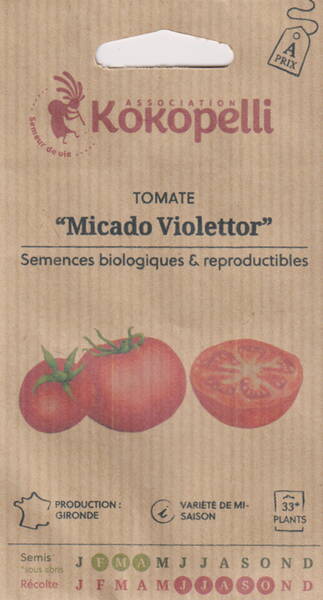
Eco seeds
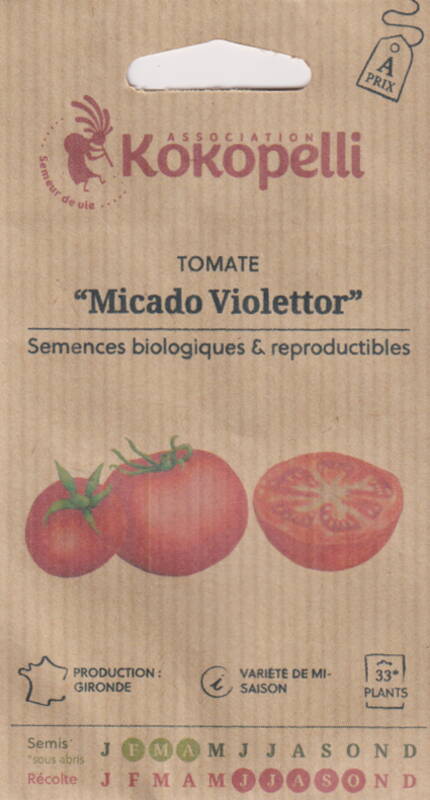
Tomato "Micado Violettor".
Historical name: Mikado Violette.
Sweet, juicy, and tasty!
A mid-ripening (105-110 days), indeterminate variety tested by time. This plant is distinguished by its unique foliage, resembling potato leaves, and beautiful dark fruits.
Characteristics:
* Plant: Strong, up to 120 cm tall (taller in greenhouses), requires staking and pruning. Up to 5-7 ovaries form in each cluster.
* Fruits: Round, uniform, dense. The color is unusual: pinkish-violet (dusky rose). Fruit weight 80-150 g.
* Taste: Amazing! The flesh is fleshy, multi-chambered, juicy, with a high sugar content and rich aroma.
Variety Value: excellent taste qualities make it a favorite for fresh salads and making thick, sweet juice. The variety is very responsive to quality care (watering, fertilizing).
HISTORICAL REFERENCE: this is a very old heirloom variety originating from Australia. It is mentioned in the famous publication by Vilmorin-Andrieux in 1885, "Les Plantes Potagères". Hardy and vigorous, it is well suited for warm climates and greenhouses.
Historical name: Mikado Violette.
Sweet, juicy, and tasty!
A mid-ripening (105-110 days), indeterminate variety tested by time. This plant is distinguished by its unique foliage, resembling potato leaves, and beautiful dark fruits.
Characteristics:
* Plant: Strong, up to 120 cm tall (taller in greenhouses), requires staking and pruning. Up to 5-7 ovaries form in each cluster.
* Fruits: Round, uniform, dense. The color is unusual: pinkish-violet (dusky rose). Fruit weight 80-150 g.
* Taste: Amazing! The flesh is fleshy, multi-chambered, juicy, with a high sugar content and rich aroma.
Variety Value: excellent taste qualities make it a favorite for fresh salads and making thick, sweet juice. The variety is very responsive to quality care (watering, fertilizing).
HISTORICAL REFERENCE: this is a very old heirloom variety originating from Australia. It is mentioned in the famous publication by Vilmorin-Andrieux in 1885, "Les Plantes Potagères". Hardy and vigorous, it is well suited for warm climates and greenhouses.