


Your shopping cart is empty!
Large-fruited pumpkin “Giant Mix”
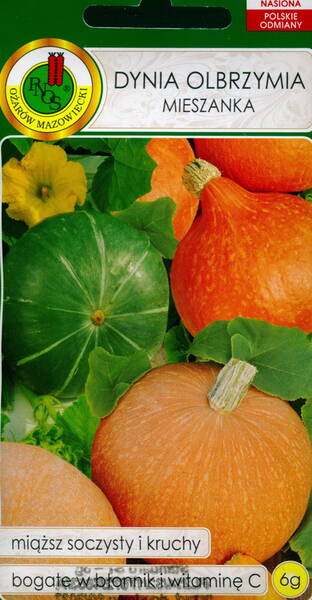
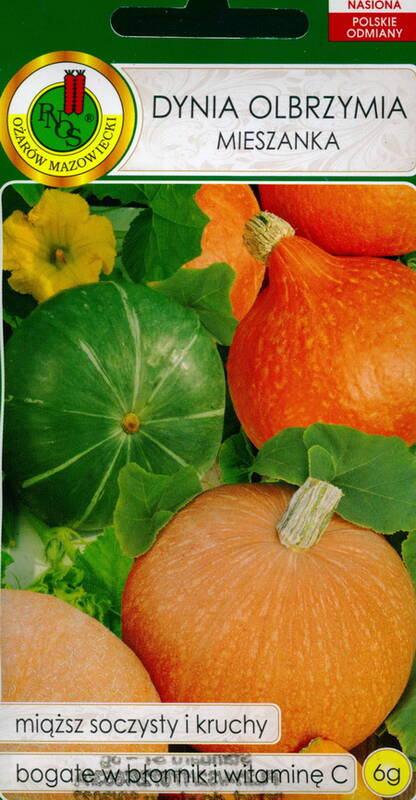
Large-fruited pumpkin “Giant Mix”.
A giant pumpkin blend. A mixture of giant pumpkins of different shapes and colors. Fruits vary in shape. Rind colors are orange and greenish marbled.
A giant pumpkin blend. A mixture of giant pumpkins of different shapes and colors. Fruits vary in shape. Rind colors are orange and greenish marbled.
* Pumpkins were first domesticated in the 3rd millennium BCE in what is now Peru and Mexico. In the early 16th century, Portuguese sailors brought them to Europe (and also to India). After that, pumpkins quickly spread across many countries...
The tastiest fruits are from butternut (muscat) pumpkins. They are usually elongated, sometimes with a “waist,” and come in pinkish-brown or yellow shades. Unfortunately, this type ripens very slowly, so it is grown more selectively.
Large-fruited pumpkins are known for big fruits (up to 50 kg), white or gray, flattened or round.
Common pumpkin has oval-to-cylindrical fruits in yellow-orange tones, sometimes with a yellow-green pattern; it also includes small decorative pumpkins with fanciful shapes and striking patterns.
Pumpkin is very beneficial. It contains many mineral salts of potassium, phosphorus, calcium, iron, magnesium, copper, cobalt, and silicon. Its yellow color comes from a high level of carotene (provitamin A); some varieties contain up to 40 mg/100 g. Pumpkin also provides vitamins C, B1, B2, B6, E, and PP. It is easy to digest thanks to relatively low fiber in the edible part and a high water content. Pumpkin contains about 8–10% sugars and few acids, making it perfect for sweets (candied fruit, fruit leather, and more).
Pumpkin keeps beautifully fresh until spring at room temperature, but only if the skin has no damage at all. Otherwise, store it in a dry, well-ventilated place at no more than 3°C.
Many nourishing, filling dishes are made from pumpkin. It can be fried or boiled (after boiling, drain it so the flavor stays clean), though it’s best gently stewed in its own juices with a little water.
In many homes, pumpkin pairs wonderfully with millet or rice porridge.
Still, pumpkin is often tastiest and most wholesome raw. For example, grate it coarsely, mix with dried fruits, add nuts, honey, lemon zest, and dress with sour cream—an amazing salad.
Not only the flesh is eaten, but also the seeds, which have many strengths. Pumpkin seeds are flat, 1–3 cm long, with a yellowish-cream coat. They contain up to 52% fatty oil and up to 28% protein.
Dried pumpkin seeds can replace almonds in confectionery and can be added to salads to boost nutrition.
* Not every pumpkin flower sets fruit on its own.
To get a good harvest, you can help by hand-pollinating the female flowers.
Take pollen from male flowers (they grow on longer stems) and transfer it to the center of female flowers (on the same plant, with a small fruit swelling at the base). A small brush works well.