


Your shopping cart is empty!
Pumpkin "Marina di Chioggia"
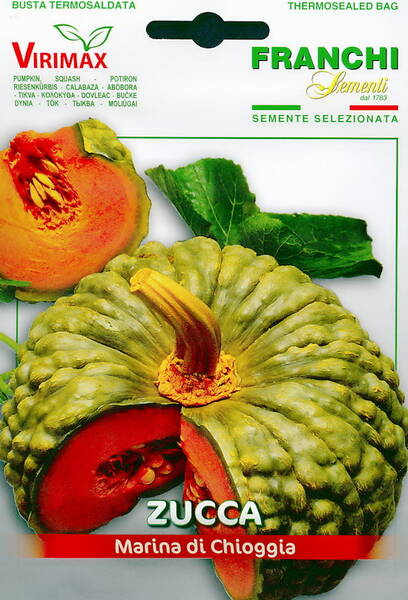
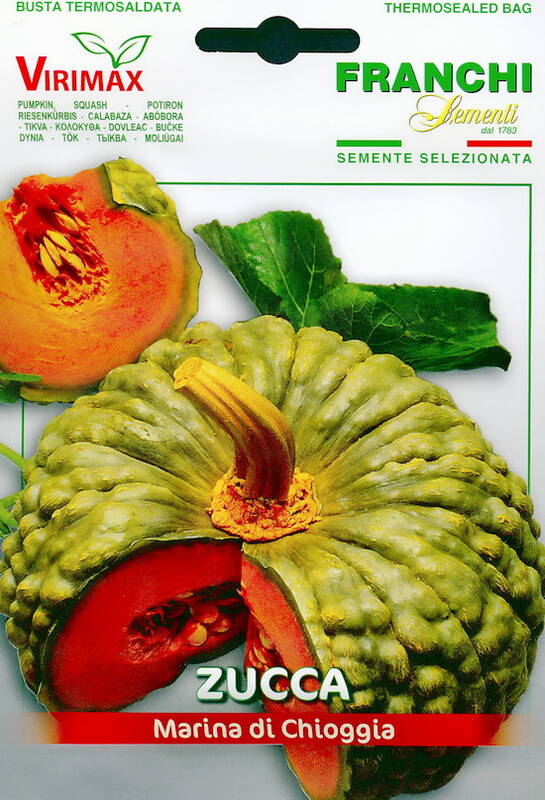
Pumpkin "Marina di Chioggia".
Yellow flesh, fruit weight 12–15 kg.
Yellow flesh, fruit weight 12–15 kg.
* "Marina di Chioggia" is one of the most beautiful and unique pumpkins. Italians see this variety as a gift from the sea and call it the “Sea Monster”.
Chioggia is a small town in northern Italy, in the Veneto region near Venice. It consists of three islands connected by canals and bridges.
The people of Chioggia have always lived by fishing, day after day earning their livelihood from the sea despite the risks.
Interestingly, just 700 meters across the bay from Chioggia lies the village of Sottomarina.
For centuries, people there worked the land and grew this now-famous pumpkin for many years.
The bridge between Chioggia and Sottomarina was built only in the 1920s.
And only when the pumpkin began to be grown in Chioggia did it receive its current name.
In Italy, seeds are sown in March and fruits are harvested already in June. With late-May planting, fruits reach technical maturity by late August.
The largest specimens grow up to 10 kg. Picked on time, they store well until spring.
Plants are very vigorous and respond well to fertile soil and regular watering.
This pumpkin is also highly ornamental. In Italy there is a tradition of keeping a pumpkin in the home as a symbol of happiness and abundance,
linked to the many seeds, a sign of fertility.
Just 200 g of pumpkin per day is enough to cover daily needs of the body.
Thanks to low calories and high fibre content that cooks мягко and is easy to digest,
pumpkin can be part of a weight-loss diet (as long as seasonings are used in moderation).
It is cooked with rice, cheese, sausages, mushrooms and spinach; used for creams, soups and delicious desserts;
boiled, baked in the oven with a touch of sweetness, or simply baked into pies.
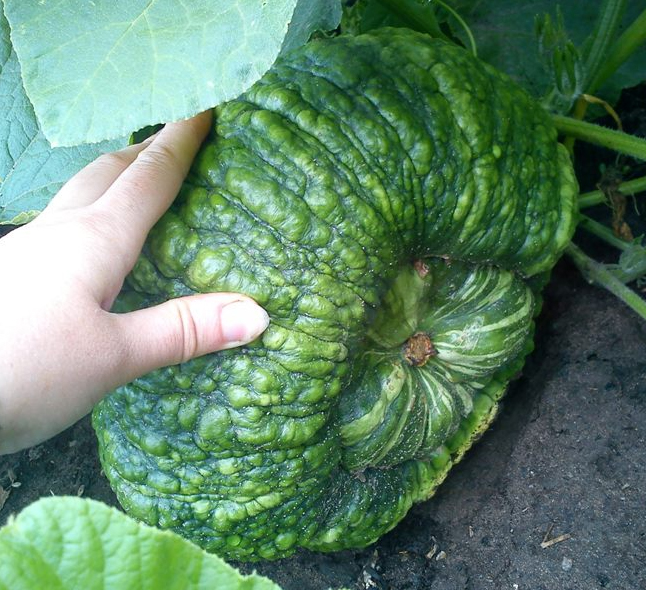
* In the garden, pumpkin behaves like the true хозяин: it takes the best sunny spot, and if you don’t watch closely, it will send its vines onto other plants—wrapping around shrubs, climbing trees, gripping tightly with its tendrils, hanging there and filling with rich flesh...
Pumpkin originates from the subtropical regions of Central and South America. It was brought to Europe at the end of the 15th century, while cultivation in Russia began only in the 16th century.
The wide variety of shapes and types of this amazing plant makes it useful in many different ways.
Pumpkin is not only eaten. It is used for remedies, made into utensils and containers for oil and dry foods, toys, rattles and musical instruments. In Moldova, for example, large pumpkins are also used as containers for pickling cucumbers.