


Your shopping cart is empty!
Sweet laurel "Exotic"
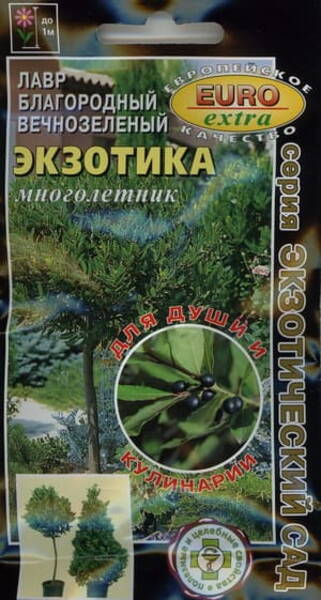
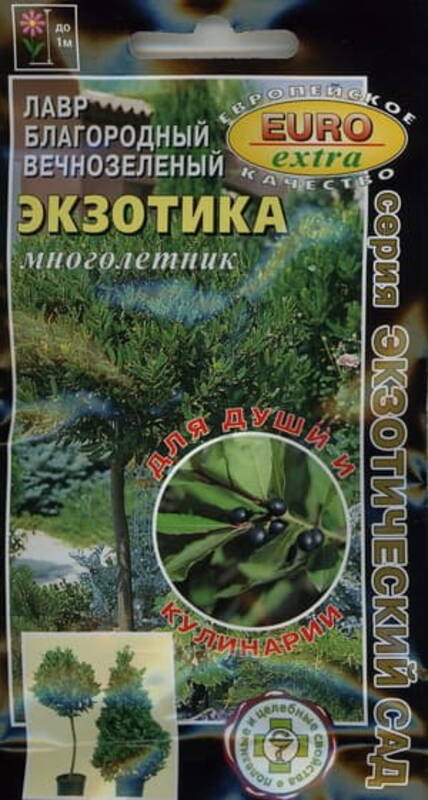
Bay Laurel "Exotica" - Laurus nobilis.
Laurel family. Native to the Mediterranean coast. Evergreen trees and shrubs with dense and fragrant leaves. Grows well indoors if it has enough light and fresh air. The crown of the plant is formed by pruning.
In indoor culture, Bay Laurel is cultivated - the leaves of which are used in cooking as a seasoning. For laurel, as an ornamental plant, it is important to maintain its shape. For this purpose, they are pruned annually, preferably at the end of summer, after the end of growth. Basically, the laurel is formed into a pyramidal shape or in the form of a standard tree with a round crown. The height is maintained up to 60-70 cm.
CARE TIPS.
Temperature: moderate, in winter around +12+15°C (can be kept in a cold room, but not below +1°C).
Lighting: laurel needs bright light, it tolerates some amount of direct sunlight. It will grow well on an east or west window.
Watering: moderate indoors and abundant outdoors from spring to autumn, very moderate in winter.
Air humidity: spray regularly. Plants exposed to the open air in summer love evening watering from a shower or hose, washing the entire crown. If this is not done, aphids attack the plant.
Transplantation: soil - a mixture of heavy sod land 2 parts, humus 1 part, leafy 1 part, and sand 1/2 part. Good drainage is essential. Laurel is usually grown in small wooden tubs. Transplanted rarely, mainly only when the old tubs rot, i.e. after a few years. Fertilizing watering is carried out in spring and summer.
Propagation: by seeds, layering, root suckers and cuttings.
Pests:
Scale insects: brown plaques on the surface of leaves and stems, sucking cell sap. The leaves lose color, dry and fall off.
Control measures. Mechanically remove insects with a soapy sponge on both sides of the leaf. Good results are given by a 0.15% solution of actellic (1-2 ml per liter of water), carbofos or decis can be used.
Spider mite: appears in too dry air - cobwebs appear in the internodes on the stems, the leaves become lethargic and fall off.
Control measures. The plant is washed with soapy water, and after it dries, it is washed under a warm shower. If the lesion is not strong, this is enough. With a very strong lesion, laurel can be sprayed with a 0.15% solution of actellic (1-2 ml per liter of water).
Laurel family. Native to the Mediterranean coast. Evergreen trees and shrubs with dense and fragrant leaves. Grows well indoors if it has enough light and fresh air. The crown of the plant is formed by pruning.
In indoor culture, Bay Laurel is cultivated - the leaves of which are used in cooking as a seasoning. For laurel, as an ornamental plant, it is important to maintain its shape. For this purpose, they are pruned annually, preferably at the end of summer, after the end of growth. Basically, the laurel is formed into a pyramidal shape or in the form of a standard tree with a round crown. The height is maintained up to 60-70 cm.
CARE TIPS.
Temperature: moderate, in winter around +12+15°C (can be kept in a cold room, but not below +1°C).
Lighting: laurel needs bright light, it tolerates some amount of direct sunlight. It will grow well on an east or west window.
Watering: moderate indoors and abundant outdoors from spring to autumn, very moderate in winter.
Air humidity: spray regularly. Plants exposed to the open air in summer love evening watering from a shower or hose, washing the entire crown. If this is not done, aphids attack the plant.
Transplantation: soil - a mixture of heavy sod land 2 parts, humus 1 part, leafy 1 part, and sand 1/2 part. Good drainage is essential. Laurel is usually grown in small wooden tubs. Transplanted rarely, mainly only when the old tubs rot, i.e. after a few years. Fertilizing watering is carried out in spring and summer.
Propagation: by seeds, layering, root suckers and cuttings.
Pests:
Scale insects: brown plaques on the surface of leaves and stems, sucking cell sap. The leaves lose color, dry and fall off.
Control measures. Mechanically remove insects with a soapy sponge on both sides of the leaf. Good results are given by a 0.15% solution of actellic (1-2 ml per liter of water), carbofos or decis can be used.
Spider mite: appears in too dry air - cobwebs appear in the internodes on the stems, the leaves become lethargic and fall off.
Control measures. The plant is washed with soapy water, and after it dries, it is washed under a warm shower. If the lesion is not strong, this is enough. With a very strong lesion, laurel can be sprayed with a 0.15% solution of actellic (1-2 ml per liter of water).
Did you know that... although laurel is a slow-growing plant, it branches actively. Therefore, if it is grown for decorative rather than just culinary purposes, it will require regular crown shaping to maintain a neat and aesthetic appearance.