

Your shopping cart is empty!
Pumpkin "Junona" (with seeds without a hard shell)
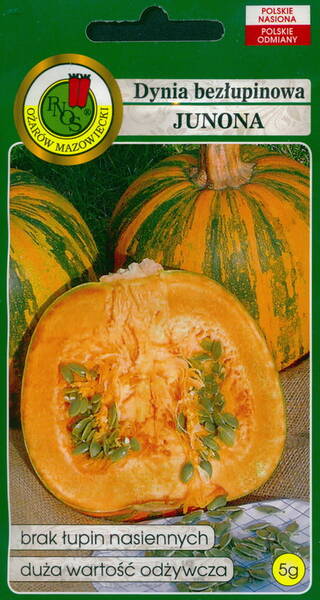
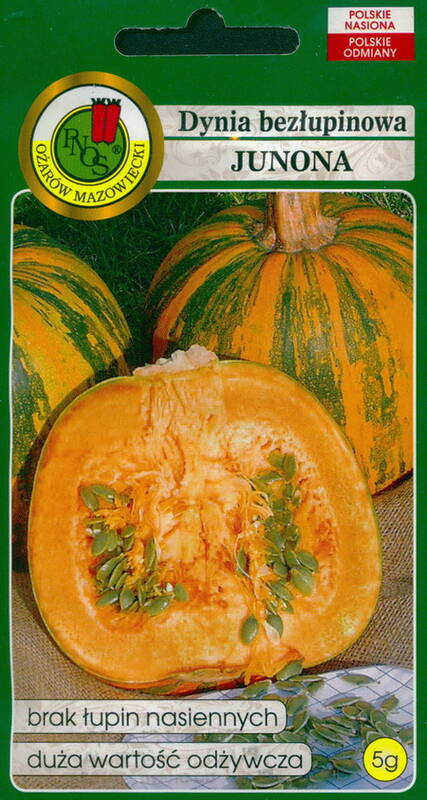
Pumpkin "Junona" (with hull-less seeds).
Mid-early (95–105 days) hull-less pumpkin variety. The plant is semi-bush.
Fruits are round, orange with green stripes; the flesh is firm and tasty; the seeds have no hard hull.
Weight about 3.0 kg. One fruit contains 300–350 seeds.
Variety value: unpretentiousness, reliable yield, good processability, high dietary and health benefits.
Pumpkin is grown both by direct sowing outdoors and via seedlings. Before sowing, seeds are warmed at +60°C for 2–3 hours or soaked for 24 hours in a stimulating solution of Epin (2–7 drops per 100 ml of water). After soaking, seeds are sown immediately or pre-sprouted.
Trailing varieties are best grown as seedlings in pots 10–15 cm in diameter with a light nutrient mix.
Soil preparation.
In autumn, loosen the soil shallowly, and after 2–3 weeks dig it to 25–30 cm, adding organic fertiliser (5–10 kg/m2) and mineral fertiliser (30–40 g/m2 of nitrophoska).
In spring, loosen the dug plot with a rake. A second digging is done on the day of sowing or the day before. On heavy and wet soils, make raised beds.
If there is not enough organic matter, add it into the planting holes (1–2 kg) when sowing or planting. It is also advisable to add 10 g of superphosphate and potassium sulfate. On clay soils, add sawdust enriched with ammonium nitrate (20 g per bucket), plus a glass of nitrophoska and a 1-litre jar of ash.
Sow pumpkin when air temperature reaches +15…+18°C and the soil at 10–12 cm depth warms to +10…+12°C for large-fruited and hard-rind types, and above +12…+13°C for butternut types (approximately late May). Trailing varieties are placed in one row along the centre of the bed. The distance between holes in a row is 0.75–2 m. Bush forms are planted at 1.2 x 1.2 m or 70 x 70 cm. Put two seeds of large-fruited pumpkin, three of hard-rind, and four to five of butternut into each hole. After sowing, mulch the holes with humus mixed 1:1 with soil.
Transplant seedlings when the risk of frost has passed. Water the holes with warm water, 1–2 litres each. Plant pumpkin seedlings deeper than in the pot, covering up to the cotyledon leaves; water and mulch. In case of cold snaps, cover plants with horticultural fleece.
Seedlings are watered daily with warm water and the soil is loosened to prevent crusting. When 1–2 true leaves appear, thin the plants: for large-fruited pumpkin leave one plant per hole; for hard-rind and butternut leave two. Final thinning for the latter is done at 3–4 true leaves.
The first feeding is carried out after 2–3 weeks. Do not let fertiliser or solution touch the plant, as it causes burns. A good option is a combined feeding: 1.5 kg of thick mullein plus 2 tablespoons of nitrophoska per 10 litres of water. After long cloudy weather, pumpkin benefits from foliar feeding.
Water pumpkin in the first half of the growing season, while the root system is still developing. Water rarely but abundantly, soaking the soil to root depth (20–30 cm).
Some gardeners pinch the main vine to speed up fruit set.
The main crop forms on the main stem. Pinching does not speed up side shoots; on the contrary, it delays ripening, so limit their number to 2–3. Remove non-fruiting shoots completely. On trailing varieties, after 2–5 ovaries reach about 17 cm in diameter, you may pinch all growth points, leaving 5–7 leaves above each fruit. This is usually done after August 10. Later, it is advisable to remove newly forming female flowers and the tips of young shoots. This pruning speeds up ripening. For larger fruits, leave 2–3 ovaries on bush varieties and 1–2 on trailing plants. Then pinch the stem, leaving 3 leaves above the last fruit.
Harvesting begins after the first frost. Dry the pumpkins and keep them for after-ripening in a dry warm shed for 2 weeks. During this time the stem wilts and the rind hardens. Before steady frosts, pumpkins can be stored on a balcony or in a shed, covering them with straw at night. When the temperature drops to +5°C, move them to a warmer room.
Mid-early (95–105 days) hull-less pumpkin variety. The plant is semi-bush.
Fruits are round, orange with green stripes; the flesh is firm and tasty; the seeds have no hard hull.
Weight about 3.0 kg. One fruit contains 300–350 seeds.
Variety value: unpretentiousness, reliable yield, good processability, high dietary and health benefits.
Pumpkin is grown both by direct sowing outdoors and via seedlings. Before sowing, seeds are warmed at +60°C for 2–3 hours or soaked for 24 hours in a stimulating solution of Epin (2–7 drops per 100 ml of water). After soaking, seeds are sown immediately or pre-sprouted.
Trailing varieties are best grown as seedlings in pots 10–15 cm in diameter with a light nutrient mix.
Soil preparation.
In autumn, loosen the soil shallowly, and after 2–3 weeks dig it to 25–30 cm, adding organic fertiliser (5–10 kg/m2) and mineral fertiliser (30–40 g/m2 of nitrophoska).
In spring, loosen the dug plot with a rake. A second digging is done on the day of sowing or the day before. On heavy and wet soils, make raised beds.
If there is not enough organic matter, add it into the planting holes (1–2 kg) when sowing or planting. It is also advisable to add 10 g of superphosphate and potassium sulfate. On clay soils, add sawdust enriched with ammonium nitrate (20 g per bucket), plus a glass of nitrophoska and a 1-litre jar of ash.
Sow pumpkin when air temperature reaches +15…+18°C and the soil at 10–12 cm depth warms to +10…+12°C for large-fruited and hard-rind types, and above +12…+13°C for butternut types (approximately late May). Trailing varieties are placed in one row along the centre of the bed. The distance between holes in a row is 0.75–2 m. Bush forms are planted at 1.2 x 1.2 m or 70 x 70 cm. Put two seeds of large-fruited pumpkin, three of hard-rind, and four to five of butternut into each hole. After sowing, mulch the holes with humus mixed 1:1 with soil.
Transplant seedlings when the risk of frost has passed. Water the holes with warm water, 1–2 litres each. Plant pumpkin seedlings deeper than in the pot, covering up to the cotyledon leaves; water and mulch. In case of cold snaps, cover plants with horticultural fleece.
Seedlings are watered daily with warm water and the soil is loosened to prevent crusting. When 1–2 true leaves appear, thin the plants: for large-fruited pumpkin leave one plant per hole; for hard-rind and butternut leave two. Final thinning for the latter is done at 3–4 true leaves.
The first feeding is carried out after 2–3 weeks. Do not let fertiliser or solution touch the plant, as it causes burns. A good option is a combined feeding: 1.5 kg of thick mullein plus 2 tablespoons of nitrophoska per 10 litres of water. After long cloudy weather, pumpkin benefits from foliar feeding.
Water pumpkin in the first half of the growing season, while the root system is still developing. Water rarely but abundantly, soaking the soil to root depth (20–30 cm).
Some gardeners pinch the main vine to speed up fruit set.
The main crop forms on the main stem. Pinching does not speed up side shoots; on the contrary, it delays ripening, so limit their number to 2–3. Remove non-fruiting shoots completely. On trailing varieties, after 2–5 ovaries reach about 17 cm in diameter, you may pinch all growth points, leaving 5–7 leaves above each fruit. This is usually done after August 10. Later, it is advisable to remove newly forming female flowers and the tips of young shoots. This pruning speeds up ripening. For larger fruits, leave 2–3 ovaries on bush varieties and 1–2 on trailing plants. Then pinch the stem, leaving 3 leaves above the last fruit.
Harvesting begins after the first frost. Dry the pumpkins and keep them for after-ripening in a dry warm shed for 2 weeks. During this time the stem wilts and the rind hardens. Before steady frosts, pumpkins can be stored on a balcony or in a shed, covering them with straw at night. When the temperature drops to +5°C, move them to a warmer room.
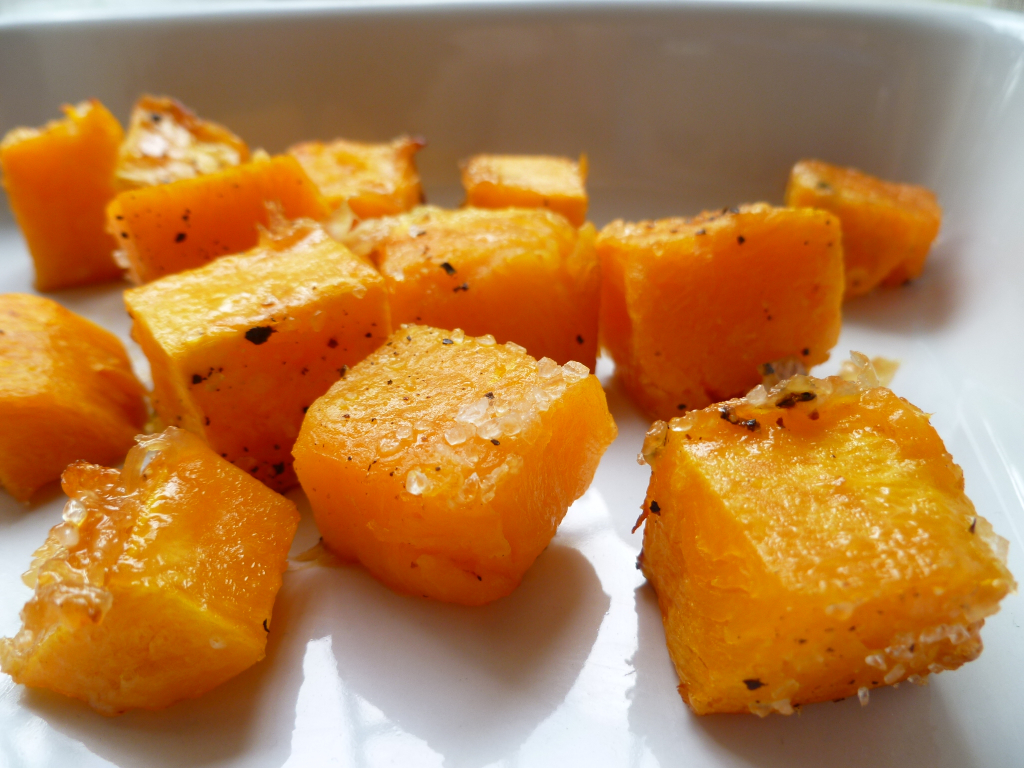
PUMPKIN GLAZED WITH HONEY AND CURRY.
Ingredients:
Pumpkin: 1/3 of a fruit.
Olive oil: 3 tbsp.
Butter: 4 tbsp.
Honey: 3 tbsp.
Apple cider vinegar: 1 tbsp.
Curry powder: 2 tsp.
Hot ground pepper: 1/4 tsp.
Salt: to taste.
1. Rinse the pumpkin, peel it, remove the seeds, cut the flesh into small pieces, and brush with olive oil.
2. Grill the pumpkin pieces for no more than 30 minutes.
3. For the glaze, mix butter, honey, apple cider vinegar, curry, salt, and ground pepper. Heat until smooth.
4. Brush the pumpkin pieces with the glaze, place them back on the grill, and cook covered until a crust forms. While grilling, you can add any remaining glaze to the flesh.