


Your shopping cart is empty!
Black Radish "Murzynka"
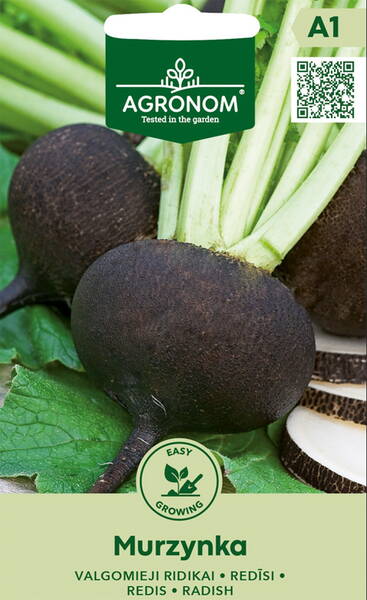
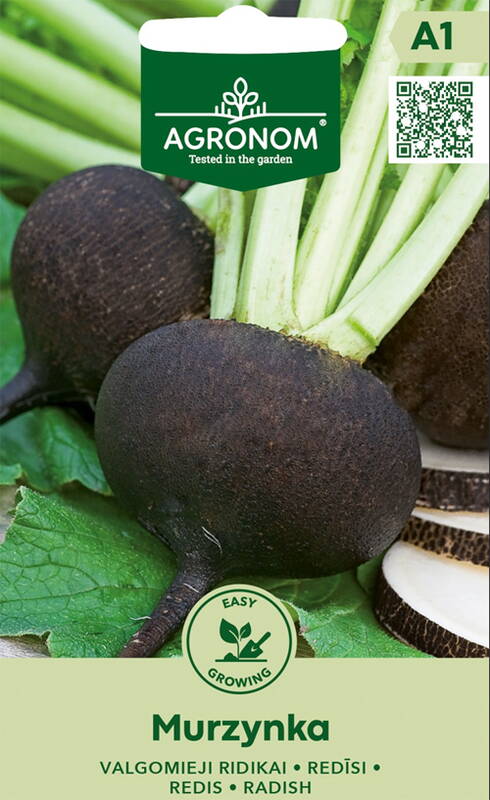
Raphanus sativus var. nigra
0,80€
Ex Tax: 0,65€
Ex Tax: 0,65€
Winter radish "Murzynka" - Raphanus sativus var. niger.
A dietary product with fast growth and healing properties.
High-yielding, mid-season winter variety: 68-75 days from germination to technical maturity.
The root crop is black, round, 9-14 cm in diameter, smooth, weighing 250-400 g. The flesh is white, juicy, with a pleasant semi-sharp taste.
Recommended for fresh consumption, preparing spicy meat and vegetarian salads, and, of course, for treating with radish and honey according to ancient recipes.
Stores throughout the entire winter.
1.0 g = 70-80 seeds.
A dietary product with fast growth and healing properties.
High-yielding, mid-season winter variety: 68-75 days from germination to technical maturity.
The root crop is black, round, 9-14 cm in diameter, smooth, weighing 250-400 g. The flesh is white, juicy, with a pleasant semi-sharp taste.
Recommended for fresh consumption, preparing spicy meat and vegetarian salads, and, of course, for treating with radish and honey according to ancient recipes.
Stores throughout the entire winter.
1.0 g = 70-80 seeds.
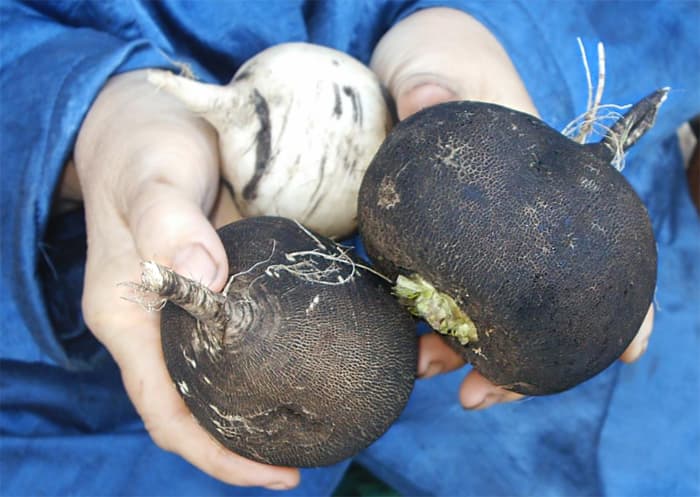
* Radish contains a rather complex chemical complex of biologically active substances: proteins, amino acids, enzymes, vitamins B and C, organic acids, lipids, and carbohydrates have been found in the roots.
It is also rich in sulphur-containing substances possessing phytoncidal properties. Anthocyanins, salts of calcium, iron, magnesium, and especially potassium have been identified in them.
In terms of potassium salt content, radish surpasses all vegetables. Radish enhances the work of the glands of the digestive tract and possesses choleretic (bile-producing) and diuretic properties.
Its juice is recommended as a choleretic agent in the form of a 30% aqueous solution, and mixed half-and-half with honey, it is used in the treatment of colds of the upper respiratory tract, especially in cases where the disease is accompanied by a debilitating dry cough and hoarseness. This same composition is recommended as a prophylactic agent to prevent gallstone and kidney stone diseases, and atherosclerosis.
Radish is used as an antiseptic agent. Juice and pulp are used to treat purulent, long-healing wounds and ulcers.
A folk «potion» for treating «aches and pains» in joints has long been famous. The preparation method is simple: dissolve 1 tablespoon of table salt in freshly prepared radish juice (2 cups), add 1/2 cup of vodka and 3/4 cup of honey, and mix it all thoroughly. The mixture is rubbed into sore spots, after which they are wrapped in woollen cloth.
Radish pulp is also used as an irritant instead of mustard plasters.
Like other medicines, radish has contraindications for use. Due to the presence of irritating substances, it should not be eaten with gastric and duodenal ulcers, gastritis with high acidity, inflammation of the small and large intestines, and liver and kidney diseases not associated with stone deposition.
In other cases, radish is useful to everyone as a valuable food product: in the diet, it should be a component of vitamin food. In folk medicine, radish combined with carrots and beets is considered an indispensable remedy for anaemia.
Roots of white and black radish are used for food, although the latter contains significantly more essential oils and mineral substances. It is the increased content of essential oils that determines the more pronounced pungent taste of black radish.
Fresh radish roots are used for food, mainly for preparing various salads: radish with vegetable oil, with sour cream, with egg. Finely chopped radish with oil makes a delicious filling for dumplings (pelmeni, vareniki) and pies.
* When is the best time to sow winter radish?
In Estonian conditions, the optimal time for sowing winter radish is the first or second half of June.
Black radish grows for quite a long time, about 90 days, so it is fed twice.
The first time at the stage of 5-6 leaves (3 tablespoons of azophoska per 10 litres of water, using 1 cup per plant).
The second time it is fed at the stage of root formation (1 tablespoon of superphosphate, 2 tablespoons of any potash fertilizer per 10 litres of water, using 1 cup per plant).